You can book the nicest meeting room in the world – but if the layout isn’t right, the session will still fall flat. The way you arrange tables and chairs affects how people interact, how well they can see and hear, and even how confident they feel speaking up.
If you’re browsing meeting room layouts and wondering which one will actually support your agenda, you’re not alone. There are lots of room layouts for meetings to choose from, and each one suits different types of conversations and events.
Below, we’ll walk through popular meeting room layout styles, explain when to use them, and dive into two of the most useful formats: the cabaret layout meeting room and the classroom layout meeting room.
Types of meeting room layouts and when to use them
Before you book a space, it helps to understand the main meeting room layout ideas you’ll come across. Here are some of the most common options and where they work best.
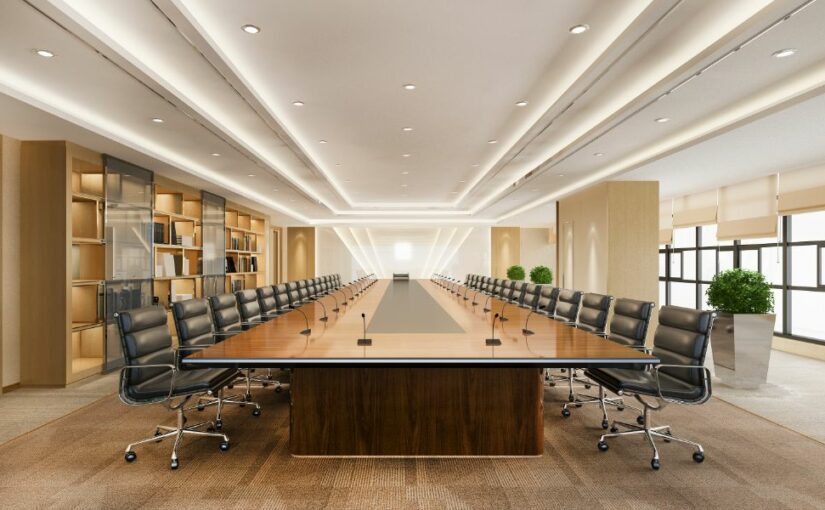
Boardroom layout
A classic boardroom layout places everyone around a single central table. It’s ideal for:
- Decision-making sessions
- Smaller leadership meetings
- Interviews or high-stakes discussions
Because everyone faces each other, it’s great for eye contact and open conversation, but less effective for larger groups or training-style events.
Theatre layout
Theatre style is rows of chairs all facing the front, with no tables. It’s perfect for:
- Presentations and briefings
- Town-hall style updates
- Speaker events
You can fit more people into the room, but it’s not designed for note-taking, laptops or group work.
U-shape or horseshoe layout
Tables arranged in a U shape give everyone a clear view of the front while still being able to see one another. This layout suits:
- Workshops with a facilitator
- Training with discussion
- Strategy or planning sessions
It encourages participation but still keeps focus towards the presenter or screen.
Hollow square
Similar to a boardroom, but with a square of tables and a gap in the middle. Hollow square works well for:
- Group discussions
- Project kick-offs
- Cross-department meetings
It’s collaborative, but can feel a little formal for creative sessions.
Informal / lounge layout
Think sofas, armchairs, coffee tables and a more relaxed feel. This style is useful when you want:
- Creative brainstorming
- One-to-ones or small team check-ins
- Less hierarchical conversation
It’s not ideal for note-heavy workshops, but great for building relationships and candid discussion.
Now let’s look more closely at two specific meeting rooms layout options that often work brilliantly for training, workshops and learning-focused events.
Cabaret layout meeting room
A cabaret layout meeting room uses small, round or square tables dotted around the space, with chairs placed only around part of each table so everyone faces the front. Think of it as the best bits of theatre style, with added comfort and collaboration.
This layout is ideal when you want people to work in small groups but still engage with a presenter or screen. It’s particularly useful for:
- Interactive workshops
- Strategy days with breakout activities
- Team-building sessions
- Conferences with group exercises between talks
Pros of a cabaret layout
- People can talk and work together without twisting in their chairs.
- The front of the room stays in clear view for slides or live demos.
- It feels more social and informal than rows of chairs.
Things to consider
Cabaret uses more floor space than theatre style, so capacity may be lower. If you’re booking through a platform like BluDesks, check the maximum numbers for a cabaret setup and whether the room can be reconfigured if your agenda changes.
Classroom layout meeting room
A classroom layout meeting room has rows of tables with chairs behind them, all facing the front – just like a traditional classroom. Each person has a surface for a laptop, notes or training materials, which makes it a practical option for:
- Formal training courses
- Software demos or product training
- Exams or assessments
- Longer learning sessions where people need to write or type
Pros of classroom layout
- Everyone has space for devices, notebooks and handouts.
- The room feels focused, with attention naturally directed to the front.
- It works well with hybrid setups, where a trainer might be presenting remotely.
Things to consider
Classroom style is less interactive than cabaret or U-shape. You can still build in discussion, but you may need to plan specific moments where people turn to those next to them or move into small groups. If your goal is collaboration rather than instruction, another meeting room layout style may be a better fit.
Which layout is best for my meeting?
With so many meeting room layouts available, the right choice depends on what you’re trying to achieve. A quick way to decide is to ask three questions:
Is this about telling, discussing or doing?
For mainly telling (presentations, briefings), a theatre or a classroom often works well.
For discussing (decision-making, strategy), try a boardroom, U-shape or hollow square.
For doing (workshops, training with exercises), the cabaret layout meeting rooms are often the most flexible
How much interaction do you want?
If you need high levels of participation, choose a layout where people can easily see and talk to each other – cabaret, U-shape or hollow square. If interaction is minimal, a theatre or a classroom will usually be more efficient.
What do people need in front of them?
If attendees need laptops, workbooks, or plenty of space for notes, classroom and cabaret layouts are strong options. If you only need people to listen and occasionally raise a question, theatre style may be enough.
You can also mix room layouts for meetings on the same day. For example, start with a theatre-style keynote, then shift to cabaret tables for afternoon workshops. When you book flexible space rather than a fixed conference venue, it’s often easier to adapt your setup to match each part of the agenda.
Try different meeting room layout ideas with BluDesks
Choosing the right layout is only half the story – you also need a space that can be configured to match your plan. That’s where BluDesks comes in.
Through BluDesks, you can book a wide range of flexible meeting room layout options, from small boardrooms to larger spaces set up in cabaret or classroom style. Many venues can switch between different meeting room layout styles on the day, so you’re not locked into one format if your agenda evolves.
If you’re planning a workshop, training session or strategy day and want to try out different meeting room layout ideas, take a look at BluDesks’ meeting rooms in London. You can filter by capacity, facilities and layout, then reserve exactly the kind of space you need – without signing a long lease or committing to a traditional conference package.
With the right layout, your next strategy session, workshop or training day won’t just run smoothly – it will actually deliver the outcomes you planned for.