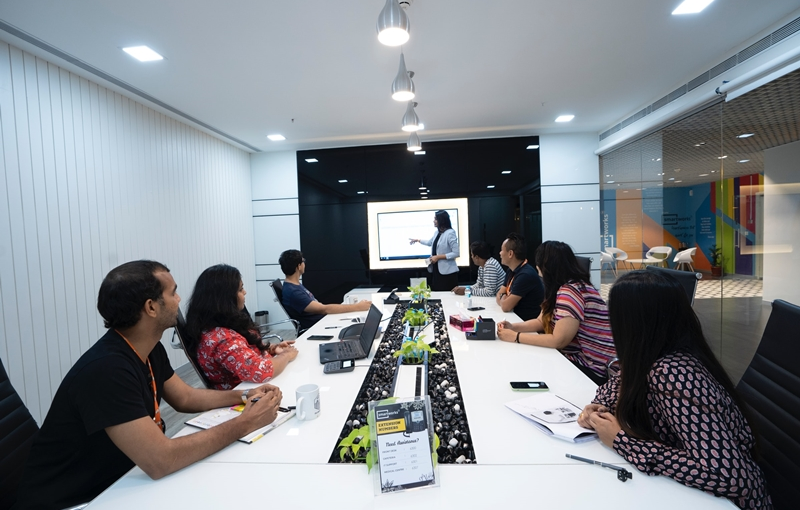
Ever notice how the first two minutes of a meeting can feel like everyone is politely waiting for someone else to become a person? In person, it is the shuffle for a seat, the polite coffee pour, and the unspoken question of who is brave enough to start. Online, it is cameras on, microphones off, a few heroic “Can you hear me?” checks… and then we dive straight into agendas.
That’s where ice breakers for team meetings quietly earn their keep. Done well, they’re not cringey, childish, or time-wasting. They’re a quick reset: a shared moment that helps people relax, speak up, and actually collaborate.
What is an icebreaker?
An icebreaker is a short activity at the start (or sometimes mid-point) of a meeting that warms up the room, literally or virtually. Think of it as the social equivalent of stretching before a run. You don’t stretch because you’re training for the Olympics; you stretch because it helps you move better.
In practical terms, ice breakers for meetings can be:
- A quick question everyone answers
- A lightweight mini-game
- A prompt that gets people sharing opinions, ideas, or context
The goal isn’t comedy (though a little classy humour never hurts). The goal is connection, momentum, and better participation.
The benefits of ice breakers for team meetings
When you choose the right ice breaker ideas for meetings, the payoff is real-and often immediate.
1) People speak sooner and more confidently
If someone has already said something in the first few minutes, they’re more likely to contribute later. Icebreakers reduce that “first time speaking” friction.
2) Meetings become more inclusive
Not everyone loves jumping into debate mode. Icebreakers give quieter team members an easier entry point and create a more even playing field.
3) You get better collaboration (not just updates)
When people feel comfortable, they ask better questions, challenge assumptions more thoughtfully, and share ideas earlier, before decisions harden.
4) They set the tone you actually want
If you want open conversation, psychological safety, and honest problem-solving, the meeting has to feel like a space where that’s welcome. A good icebreaker signals: “We’re here to work together, not perform productivity.”
5) They’re especially useful for hybrid and remote teams
In a room, you get natural small talk while people arrive. Online, you mostly get silence and a grid of faces pretending they’ve never met a human before. Icebreakers recreate the missing “arrival moment”.
If you’re running in-person sessions, a change of environment can help too, especially for workshops or recurring leadership meetings. If you need an easy, professional venue option, BluDesks’ meeting rooms can give teams space to think clearly and collaborate without office distractions.
How long should an icebreaker be?
Shorter than you think.
- 2–5 minutes is the sweet spot for most regular meetings
- 5–10 minutes works for workshops, kick-offs, or sessions with new groups
- Under 2 minutes can still work (a single prompt, one-word check-in, quick vote)
A useful rule: the shorter the meeting, the lighter the icebreaker. Nobody wants a 12-minute game before a 15-minute catch-up. (That’s how you end up with an icebreaker that needs its own icebreaker.)
Also, match the energy to the context:
- Monday morning: keep it gentle
- After lunch: add something punchier
- High-stakes meeting: choose calm, grounding prompts
Ice breaker games for team meetings
Games don’t need props, awkward acting, or forced enthusiasm. The best ice breaker games for meetings are simple, fast, and easy to join.
1) “Two Truths and a Stretch”
A modern twist: two true statements and one “stretch goal” for the week/month. Great for teams who want something personal and work-relevant.
Why it works: it’s low-pressure, reveals interesting context, and gets people talking beyond tasks.
2) “This or That (Work Edition)”
Put two options in the chat or on a slide:
- Deep work vs quick wins
- Meeting notes vs action items
- Early mornings vs late nights
People answer quickly, then you ask one or two “why?” follow-ups.
Why it works: fast, funny, and surprisingly revealing about working styles.
3) “One-Word Weather Report”
Everyone shares one word for their current state: “Sunny”, “Foggy”, “Stormy”, “Breezy”.
Optional: add a second word for what would help.
Why it works: emotionally intelligent without being overly personal.
4) “Show & Tell (30 Seconds)”
Ask people to share one item from their desk or workspace and why it’s there.
Why it works: it’s human, visual, and easy, especially on video calls.
5) “The GIF Summary”
Prompt: “Drop a GIF that describes your week so far.”
Then pick two to comment on (don’t analyse everyone’s GIF like it’s a performance review).
Why it works: quick, playful, and great for remote teams.
6) “Would You Rather… but Useful”
Examples:
- Would you rather have a 4-day workweek or no meetings on Wednesdays?
- Would you rather get instant feedback or surprise praise?
- Would you rather plan everything or improvise?
Why it works: It’s light, but it leads into real preferences and team norms.
7) “Win of the Week”
Each person shares one small win; work, or personal. Keep it brief.
Why it works: resets the mood and encourages recognition without turning into a humblebrag Olympics.
Ice breaker questions for team meetings
If you want the simplest possible approach, questions are the easiest win. The best ice breaker questions for team meetings are easy to answer, genuinely interesting, and not too personal.
Here are options you can rotate depending on the team and the type of meeting.
Quick, low-pressure starters
- What’s one word for how you’re arriving today?
- What’s one small thing you’re looking forward to this week?
- What’s your current “default tab” (what’s been on your mind lately)?
Work-style and collaboration questions
- What helps you do your best work when things get busy?
- What’s one thing you wish people knew about how you like to work?
- What’s a meeting habit we should keep, and one we should retire?
Creative or funny prompts
- If this meeting had a soundtrack, what would it be?
- What’s your “unexpectedly useful” skill?
- What’s a tiny hill you’ll happily die on at work? (Example: “If it isn’t written down, it isn’t real.”)
Meeting-relevant questions (great for kick-offs)
- What would make this meeting a success for you?
- What’s one risk we should watch for?
- What’s one thing you’re hoping we clarify today?
Team-building without the cringe
- What’s something you’ve learned recently (big or small)?
- What’s a moment you felt proud of the team in the last month?
- What’s a tradition or ritual we should start?
If you’re not sure where to begin, start with one question, keep it consistent for a few meetings, then evolve it. The goal is to build a rhythm, not a one-off performance.
A simple way to choose the right icebreaker
When deciding between ice breakers for team meetings, ask three quick questions:
- What’s the mood in the room? (tired, tense, excited, distracted)
- What does the meeting need? (energy, honesty, focus, creativity)
- How well does everyone know each other? (new group vs familiar team)
Then match:
- Need focus – one-word check-in or success criteria question
- Need energy – GIF summary or This/That
- Need trust – win of the week or work-style prompt
Used consistently, the right ice breakers for meetings don’t feel like an “extra”. They feel like the part where the meeting finally becomes a meeting.
Used consistently, the right icebreakers don’t just warm up a meeting; they shape how people think, contribute, and work together. And if you’re running in-person sessions, the setting matters just as much as the structure. A change of environment can sharpen focus, encourage openness, and make collaboration feel intentional again. For workshops, leadership sessions, or recurring team meetings, BluDesks’ professional meeting rooms offer a calm, flexible space designed to help teams connect and do their best thinking, without the usual office distractions.