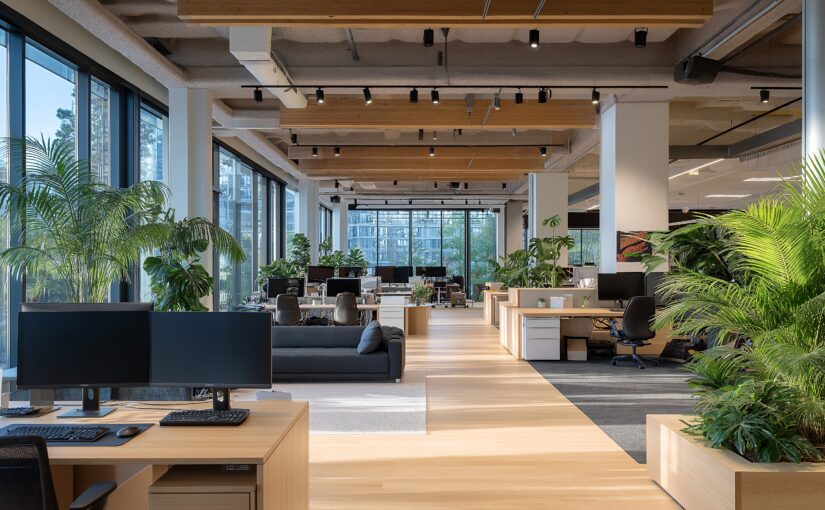
Businesses across the UK entered 2026 with a very different mindset from just a few years ago. Growth still matters. Expansion still matters. But increasingly, business leaders are becoming more cautious about how they grow, where they invest, and which long-term commitments actually make commercial sense. Many businesses are now exploring flexible office space London solutions to reduce long-term operational costs.
In previous years, expansion often meant larger offices, bigger teams, longer leases, and more permanent infrastructure. Today, many organisations are moving in a different direction entirely.
Instead of committing to larger fixed overheads, businesses are prioritising flexibility, operational agility, and scalable infrastructure that can adapt quickly to changing market conditions. That shift is quietly reshaping how modern businesses operate.
The Business Environment Has Changed
Economic uncertainty is no longer viewed as a temporary phase. Businesses continue to navigate rising operational costs, cautious consumer spending, salary pressures, recruitment uncertainty, and ongoing geopolitical instability that can rapidly affect confidence across global markets.
At the same time, many companies are still adapting to long-term workplace changes created by the pandemic. Hybrid working, distributed teams, and flexible schedules are no longer niche ideas—they are now part of mainstream business operations.
As a result, organisations are becoming far more selective about taking on fixed commitments that may limit agility in the future. And for many businesses, office space is now one of the first overheads being reconsidered.
Why Expansion No Longer Looks the Same
Traditionally, expansion followed a predictable formula. More employees meant more desks. More clients meant larger offices. Growth often translated directly into bigger physical infrastructure. But many businesses are beginning to realise that scaling operations does not always require scaling permanent office space.
A company may need occasional collaboration space without maintaining a full-time headquarters. Teams may only meet physically a few times per week. Client presentations may require professional meeting environments without the cost of permanent offices sitting half empty. That has fundamentally changed how businesses think about workspace.
Instead of asking:
“How much office space do we need?”
Businesses are increasingly asking:
“How much office space do we actually use?”
Why Flexible Office Space London Is Becoming More Popular
For many organisations, flexibility now offers a stronger commercial advantage than ownership. Businesses want the ability to scale workspace use up or down depending on operational demand, team structure, project requirements, or economic conditions.
This is why demand for meeting rooms, coworking spaces, hot desks, flexible workspace solutions continue to grow across London and the UK. Rather than paying continuously for underused infrastructure, businesses can now access professional workspace only when needed. That creates a far more agile operating model.
Corporates Are Prioritising Agility
Larger organisations are increasingly moving towards hybrid operating structures that reduce dependence on centralised offices. Many are adopting regional collaboration models, allowing employees to work closer to home while still accessing professional workspace for meetings, presentations, workshops, and team collaboration when necessary.
This approach not only improves flexibility but can also help reduce unnecessary real estate costs while supporting employee wellbeing and productivity. For corporates managing large volumes of business correspondence across distributed teams, digital infrastructure is becoming equally important.
Solutions such as Low-Cost Letter Box digital mailroom services help businesses manage incoming mail securely without relying on traditional office administration.
SMEs Are Looking for Smarter Growth Models
Small and medium-sized businesses often face the greatest pressure when balancing professionalism with operational cost control. Many SMEs no longer want to commit to expensive full-time offices when flexible alternatives now exist.
Instead, businesses are increasingly using:
- pay-as-you-go meeting rooms
- part-time office access
- coworking environments
- flexible workspace memberships
- virtual office solutions
This allows businesses to maintain a professional presence while keeping operational overheads manageable. Professional business address solutions such as Low-Cost Letter Box virtual office services are also becoming increasingly attractive for startups and growing businesses looking to establish credibility without committing to permanent office leases.
Freelancers and Independent Professionals Are Working Differently
The shift towards flexibility is not limited to larger organisations. Freelancers, consultants, remote professionals, and independent founders are increasingly building businesses without traditional office infrastructure altogether.
But professionalism still matters. Client meetings, presentations, focused work sessions, and networking often require environments that go beyond cafés or home offices. Flexible workspace and pay-as-you-go hot desk access provide professionals with the ability to work productively while maintaining flexibility and cost control.
If You’re Rethinking Workspace Strategy, Read These Before Making Your Next Move
If rising costs, changing work patterns, and underused office space are already forcing your business to rethink how it operates, you are certainly not alone. Across London and the UK, many businesses are beginning to realise that the traditional office model no longer delivers the same value it once did. The challenge now is not simply finding workspace—it is finding smarter ways to stay productive, professional, and commercially agile without carrying unnecessary overhead.
That is exactly why more businesses are exploring flexible workspace strategies, hybrid working models, and pay-as-you-go infrastructure solutions. If you are currently reviewing how your business can reduce costs while continuing to operate efficiently, these BluDesks insights are well worth your time.
- Cut Business Overheads with Coworking Spaceexplores how businesses are reducing operational pressurethrough smarter workspace decisions.
- Is Working from Home Racking Up Your Energy Costs?uncovers the hidden financial impact of remote working that many businesses and employees often overlook:
- And if you are still evaluating which workspace model best fits your organisation,Everything You Need to Know About Flexible Office Spaces offers a broader perspective on how businesses across London and the UK are adapting to more flexible ways of working.
Because the smartest workspace decisions rarely begin with choosing an office. They begin with understanding how modern businesses can operate more efficiently.
The Businesses Adapting Fastest Are Not Always the Biggest
In 2026, business success is increasingly being defined by adaptability rather than size. The organisations responding fastest to economic uncertainty are often the ones reducing fixed commitments, improving operational agility, and investing in scalable infrastructure instead of unnecessary overhead.
BluDesks helps businesses access flexible office space London solutions without the burden of fixed office commitments. With BluDesks, businesses can access professional workspace across London, the UK, and globally—including meeting rooms, coworking spaces, hot desks, and flexible workspaces—on a practical pay-as-you-go basis.
Combined with virtual office and digital mailroom infrastructure from Low-Cost Letter Box, businesses of all sizes can operate professionally without relying on outdated fixed-office models. The future of business may not belong to the companies with the biggest offices. It may belong to the businesses flexible enough to adapt fastest.