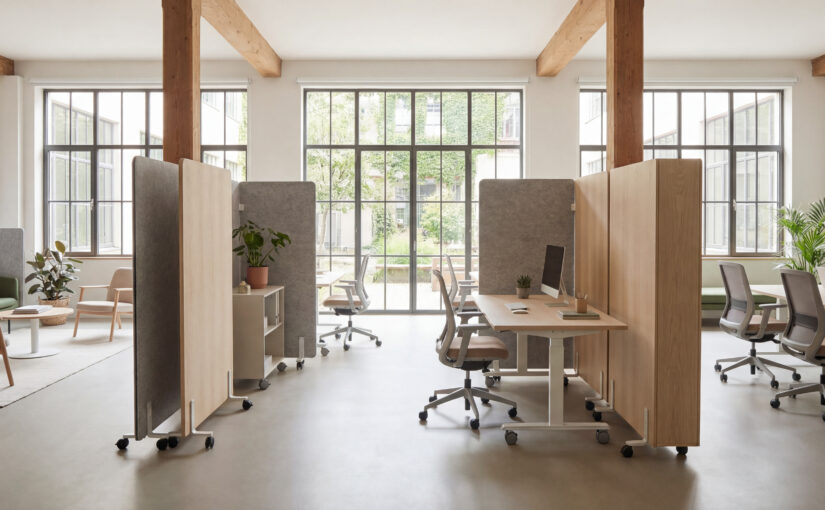
Business Continuity: Keep Your Business Running During UK Heatwaves

Date: Thu Jun 25 Author: Stanley Samidas

Business continuity has become a growing priority for organisations across the UK. The recent heatwave has shown how quickly normal business operations can change. Train delays, school closures, and travel disruption have forced many businesses to rethink how employees travel, meet clients, and continue delivering services.

For business owners, managers, employees, and clients, this raises a practical question: when travel becomes difficult and normal routines change, does business have to slow down as well?

The answer depends on how well an organisation can work flexibly. Businesses that depend on one fixed office, one commuting pattern, or one traditional way of working may struggle during disruption.

In contrast, businesses that use flexible workspace, digital communication, and remote-friendly infrastructure can often adapt faster.

How UK Heatwave Business Disruption Affects Organisations

The UK’s heatwave has highlighted how quickly everyday business routines can change. Transport disruption does not only delay employees. It can also affect client meetings, supplier appointments, interviews, training sessions, and project deadlines.

National Rail has advised passengers to check journeys carefully during hot weather. Extreme temperatures can affect railway infrastructure and lead to delays, cancellations, and amended timetables. You can read more from National Rail’s hot weather travel updates.

Network Rail also explains that hot weather can cause railway tracks and overhead lines to expand. As a result, rail operators may need to introduce speed restrictions to keep services safe. Further details are available from Network Rail’s guidance on hot weather and the railway.

For businesses, travel disruption is not just a personal inconvenience. It can quickly become a productivity, customer service, and operational continuity issue.

School Closures Add Another Layer of Pressure

When schools close or shorten the school day during extreme weather, working parents often need to change their plans at short notice. That can affect attendance, meeting availability, commuting decisions, and working hours.

Recent reporting showed that hundreds of schools expected to close or partially close during the heatwave. Rail passengers also received advice to travel only if necessary. More details can be found in ITV News coverage of school closures and heatwave disruption.

This matters because many organisations still build their working practices around predictable routines. Employees travel to one office, meetings happen in one location, and client appointments depend on easy travel.

Extreme weather challenges that assumption. Businesses now need practical alternatives that help work continue when travel, childcare, or commuting patterns change suddenly.

Business Does Not Always Need to Stop When Travel Does

Not every business activity requires everyone to travel into a central office. In many cases, teams simply need the right environment at the right time.

A client meeting may need a professional room close to the client rather than near the company’s main office. A project team may need temporary workspace closer to where employees live. A remote worker may need a quiet and professional environment when home feels too hot, too busy, or unsuitable for focused work.

This is where flexible workspace becomes a practical business continuity tool.

Through BluDesks meeting rooms, businesses can access professional meeting spaces when face-to-face discussions matter but travel into a central headquarters is not practical. Instead of cancelling or delaying important discussions, organisations can choose a more convenient location.

Flexible Workspace Supports Resilient Teams

Disruption does not affect every employee in the same way. Some may struggle with train cancellations. Others may need to stay closer to home because of school closures. Some may still need a professional environment to meet clients, make calls, or complete focused work.

Modern coworking spaces and hot desks help businesses respond to these different needs without committing to permanent office space in every location.

For hybrid teams, this can add real value. Employees do not always need to work from home or commute into a fixed office. They can access professional workspace closer to where they are, which helps businesses maintain productivity and reduce unnecessary travel pressure.

This approach also supports employee wellbeing. During heatwaves or transport disruption, long and difficult journeys can reduce morale and performance. When businesses give teams practical alternatives, they show preparation, flexibility, and a realistic understanding of modern work.

From Emergency Response to Smarter Planning

The real lesson from the heatwave is not only that businesses need temporary solutions during extreme weather. It also shows that disruption needs planning before it happens.

The Met Office provides weather warnings and updates that help individuals and organisations prepare for extreme conditions. Businesses can follow official guidance through the Met Office UK weather warnings.

However, weather alerts only help when businesses already have flexible systems in place. A warning may tell a company that disruption is coming, but it does not solve where teams should meet, how employees should work, or how important correspondence should move through the business.

This is why many organisations now rethink traditional office dependence. Rather than relying on one office, businesses increasingly use flexible workspaces and shared workspaces as part of a broader continuity strategy.

Previous BluDesks Insights Worth Reading

This topic also connects closely with previous BluDesks articles about the changing role of workspace in modern business.

Earlier BluDesks content such as “How to Beat London’s Sky-High Office Rents in 2026”, “Why UK Businesses Are Rethinking Growth in an Uncertain Interest Rate Environment”, and “Why Some Teams Perform Better Than Others” share the same theme: businesses need professional workspace, but they do not always need permanent office commitments.

Heatwave disruption brings that argument into sharper focus. When travel becomes unpredictable, access to workspace in different locations becomes more than a convenience. It becomes part of how businesses protect meetings, productivity, and service delivery.

Why Digital Business Infrastructure Also Matters

Workspace is only one part of business continuity. Communication, mail handling, document access, and professional business presence also matter.

When employees work remotely or from different locations during disruption, businesses still need to receive, handle, and process important correspondence securely. A company may not have staff physically present at one office every day. However, clients, suppliers, regulators, and partners still expect reliable communication.

This is where LowCost LetterBox supports a more resilient operating model. A LowCost LetterBox Virtual Office London service helps businesses maintain a professional address without relying on a permanent office. A LowCost LetterBox Registered Office Address can support company compliance and privacy, while LowCost LetterBox Digital Mailroom Management Services help organisations manage correspondence more efficiently in remote or hybrid working environments.

For businesses dealing with heatwaves, rail disruption, school closures, or other unexpected events, this infrastructure can reduce dependence on one physical office location.

The Future of Work Needs Built-In Flexibility

The UK’s heatwave has shown that disruption can arrive quickly and affect businesses in several ways at once. Transport becomes unreliable. Schools change plans. Employees need flexibility. Clients still expect service. Meetings still need to happen.

Businesses that prepare for this reality can continue operating when conditions become difficult.

BluDesks helps organisations access professional meeting rooms, coworking spaces, hot desks, flexible workspaces, and shared workspaces across London, the UK, and globally. LowCost LetterBox supports the same modern operating model through virtual office, registered office, and digital mailroom services.

Together, these solutions help businesses stay professional, connected, and operational even when travel and routines change.

Extreme weather may interrupt journeys, but with the right workspace and digital business infrastructure, it does not have to interrupt business.

Businesses that invest in business continuity today can prepare better for tomorrow’s unexpected disruptions, whether they come from extreme weather, transport issues, or other operational challenges.

Why High-Performing Teams Perform Better Than Others

Date: Thu Jun 18 Author: Stanley Samidas

Every business wants high-performing teams. Whether an organisation is a startup, an SME, or a large corporation, success often depends on how effectively people work together. Yet many businesses face a common challenge. They may have talented employees, experienced managers, and clear objectives, but team performance still falls short of expectations. Projects take longer than planned, communication breaks down, decisions are delayed, and opportunities are missed.

This raises an important question: why do some teams consistently perform better than others?

The answer is rarely down to individual talent alone. Research and business experience increasingly show that high-performing teams are built on strong communication, effective collaboration, shared purpose, and access to the right working environment. As organisations continue to adapt to hybrid working and changing workplace expectations, understanding what drives team performance has become more important than ever.

Why High-Performing Teams Consistently Achieve Better Results

One of the most common characteristics of successful teams is clarity. People perform better when they understand what they are working towards and how their individual contributions support wider business goals.

When objectives are unclear, teams often experience confusion, duplication of effort, and conflicting priorities. Employees may work hard, but their efforts do not always move the organisation in the same direction.

High-performing teams typically have a strong understanding of their responsibilities, priorities, and expectations. Team members understand not only what they need to achieve but also why their work matters.

Insights published by Harvard Business Review continue to highlight the importance of clear goals, leadership, and team dynamics in driving organisational performance.

How High-Performing Teams Communicate More Effectively

Technology has transformed the way organisations communicate. Teams can now collaborate across cities, countries, and time zones with relative ease.

However, communication challenges have not disappeared. In many organisations, the growing number of communication channels has created new complexities. Emails, messaging platforms, video calls, and project management tools all play valuable roles, but they can also contribute to information overload.

The strongest teams focus on communication quality rather than communication quantity. They create opportunities for meaningful discussions, encourage knowledge sharing, and ensure that important information reaches the right people at the right time.

When communication improves, decision-making becomes faster, misunderstandings decrease, and teams become more effective at solving problems together.

Why High-Performing Teams Prioritise Collaboration

Many businesses have invested heavily in digital collaboration tools over the past few years. While technology remains important, collaboration is ultimately a human activity.

People generate ideas, solve problems, and build relationships through interaction. This is one reason why face-to-face collaboration continues to play a valuable role in modern business.

Strategic planning sessions, project workshops, onboarding programmes, client presentations, and brainstorming discussions often benefit from being conducted in professional environments designed to support engagement and participation.

Research from Gallup Workplace Insights consistently highlights the connection between employee engagement, teamwork, and organisational performance.

The Working Environment Influences Performance

The environment in which people work can have a significant impact on performance.

A distracting environment can reduce concentration and productivity. Equally, unsuitable meeting spaces can affect communication, collaboration, and client interactions.

As workplace expectations continue to evolve, many organisations are moving away from the assumption that every employee requires a permanent desk in a traditional office.

Instead, businesses are increasingly adopting more flexible workspace strategies that allow teams to access professional environments when needed.

Professional meeting rooms provide dedicated spaces for presentations, workshops, client meetings, and team discussions. Modern coworking spaces create opportunities for focused work, networking, and collaboration. Flexible hot desks support hybrid workers and travelling professionals, while scalable flexible workspaces help organisations adapt workspace requirements as business needs change.

Rather than paying for office space that may be underused, businesses can access professional environments that support productivity, teamwork, and growth.

Trust Is the Foundation of Strong Teams

High-performing teams are built on trust.

Team members need confidence that colleagues will deliver on commitments, communicate openly, and contribute positively to shared objectives.

Without trust, collaboration becomes more difficult. Employees may become reluctant to share ideas, raise concerns, or take initiative.

Building trust requires consistent leadership, transparency, and a culture that encourages open communication. It also requires opportunities for people to develop stronger working relationships.

While digital communication offers convenience, face-to-face interaction often helps strengthen trust and improve team cohesion. This is one reason many organisations continue to combine remote working with opportunities for in-person collaboration using professional shared workspaces and meeting facilities.

Supporting Modern Teams Beyond the Workplace

Modern team performance is influenced by more than meetings and collaboration. Administrative efficiency, professional infrastructure, and business support services also play important roles.

Many businesses now operate with hybrid or remote-first models while maintaining high standards of professionalism and customer service. This has contributed to growing demand for solutions that support flexible ways of working without compromising credibility.

According to insights from MIT Sloan Management Review, organisations continue to adapt their structures, processes, and operating models to improve performance in an increasingly dynamic business environment.

Alongside flexible workspace solutions, businesses are increasingly adopting services that simplify operations and support professional business management.

For example, a Virtual Office London service can help businesses establish a professional presence without the cost of a permanent office. A Registered Office Address helps companies maintain compliance while protecting privacy, and Digital Mailroom Management Services help businesses manage correspondence more efficiently in a hybrid working environment.

Together, these services enable organisations to remain flexible while maintaining professional standards.

The Best Teams Do Not Succeed by Accident

High-performing teams are rarely the result of luck. They are created through deliberate decisions about leadership, communication, collaboration, culture, and working environments.

Businesses that invest in these areas often create stronger employee engagement, better customer experiences, and improved long-term performance.

As organisations continue to navigate changing workplace expectations, the businesses that succeed will be those that create the right conditions for people to perform at their best.

Whether through professional workspace solutions available through BluDesks or modern business support services from Low-Cost Letter Box, organisations have more opportunities than ever to build productive, collaborative, and adaptable teams.

Ultimately, the teams that perform better are not necessarily the ones with the most resources. They are the ones with the strongest foundations for communication, collaboration, and shared success.

UK Business Productivity: The Biggest Challenge!

Date: Fri Jun 12 Author: Stanley Samidas

UK business productivity has become one of the most important challenges facing organisations today. For years, UK businesses have focused on managing costs, navigating economic uncertainty, and responding to changing market conditions. Inflation, recruitment challenges, rising operational expenses, and global events have dominated headlines and boardroom discussions alike.

Yet beneath these widely discussed issues lies another challenge that may have an even greater impact on long-term business success: Business productivity UK is becoming an increasingly important topic for organisations seeking sustainable growth and stronger performance.

Productivity does not simply mean working harder or longer hours. It is about how effectively businesses use their people, resources, technology, and working environments to achieve better outcomes.

In an increasingly competitive economy, organisations are beginning to realise that sustainable growth depends not only on controlling costs but also on improving how work gets done.

The question many business leaders are now asking is:

How can we create an environment where teams collaborate more effectively, make better decisions, and perform at their highest potential?

Why UK Business Productivity Has Become a Strategic Priority

The most successful businesses rarely outperform their competitors because they spend more money or employ more people.They often succeed because they operate more efficiently.Stronger communication, faster decision-making, better collaboration, and more effective use of resources all contribute to higher levels of performance.

As markets become more competitive and customer expectations continue to evolve, businesses can no longer rely solely on growth through expansion. Increasingly, organisations are looking inward and examining how they can improve performance without significantly increasing costs.

This shift is driving organisations of all sizes to make productivity a strategic priority.

According to insights published by the World Economic Forum, workplace transformation, evolving work models, and advances in technology continue to reshape how businesses approach productivity and performance.

The Most Successful Businesses Are Rethinking How Work HappensFor decades, the traditional office was viewed as the centre of business activity. Employees worked from a fixed location, collaboration happened face-to-face, and productivity was often measured by presence rather than outcomes.

Today’s workplace looks very different.Hybrid working, remote teams, flexible schedules, and digital collaboration have permanently changed how organisations operate.Rather than asking where employees should work, many businesses are now asking:

What working environment helps our people perform at their best?

The answer is rarely the same for every organisation, team, or individual.Some tasks require focused, uninterrupted work. Others benefit from collaboration, brainstorming, and face-to-face interaction.

The businesses that recognise these differences are increasingly designing more flexible working models that prioritise outcomes rather than location.

Research from Microsoft’s Work Trend Index continues to highlight how organisations around the world are adapting their workplace strategies to improve collaboration, employee engagement, and performance.

Why Collaboration Has Become a Competitive Advantage

One of the biggest barriers to productivity is not a lack of effort. It is often a lack of effective collaboration.

When communication becomes fragmented, decisions take longer, projects stall, and opportunities can be missed.

At the same time, businesses that create opportunities for teams to collaborate effectively often benefit from faster decision-making, stronger innovation, and improved employee engagement.

This does not necessarily mean returning to traditional office models.

Instead, many organisations are creating more intentional opportunities for collaboration when it matters most.

Professional environments help teams get more value from client presentations, project workshops, onboarding sessions, and strategic planning discussions.

Businesses that are actively reviewing how workspace impacts performance may also find our article Why UK Businesses are Rethinking Growth in an Uncertain Interest Rate Environment particularly relevant, as it explores how organisations are balancing growth ambitions with flexibility.

Why Leading Businesses Are Choosing More Flexible Workspace Strategies

As workplace expectations evolve, many organisations are moving away from the assumption that every employee requires a permanent desk in a permanent office.

Instead, businesses are increasingly adopting flexible workspace strategies that provide access to professional environments when they are needed most.

This approach allows organisations to maintain professionalism while improving operational efficiency.

Meeting rooms provide a professional setting for client meetings, presentations, and team collaboration.

Coworking spaces offer productive environments for individuals and project teams.

Hot desks provide flexibility for hybrid workers and travelling professionals.

Flexible workspace solutions allow businesses to scale their workspace requirements in line with actual demand.

Many organisations now view business productivity UK as a competitive issue rather than simply an operational concern. This shift is encouraging businesses to rethink how workspace, collaboration, and technology support performance.

Rather than paying for underused office space, organisations can access the shared workspace at the right time.

Businesses exploring ways to balance flexibility with professionalism may also find our article How to Beat London’s Sky-High Office Rents in 2026 useful, where we examine how organisations are rethinking traditional office commitments.

Building a More Agile Business Infrastructure

Where people work is only one factor that affects productivity. Systems and processes also shape day-to-day productivity.

Many organisations are reviewing administrative processes, communication workflows, and business infrastructure to identify opportunities for greater efficiency.

According to workplace and organisational performance insights published by McKinsey & Company, businesses that successfully combine flexibility with operational efficiency are often better positioned to improve long-term performance.

This trend extends beyond workspace.

A growing number of businesses are also reconsidering the need for traditional office infrastructure while maintaining a professional presence.

Low-Cost Letter Box supports this shift through virtual office and digital mailroom services that help businesses establish a professional address, manage correspondence efficiently, and support hybrid or remote working models.

Together, flexible workspace and modern business infrastructure create opportunities for organisations to remain agile while maintaining high professional standards.

The Businesses That Will Thrive

The organisations best positioned for future success are unlikely to be those with the largest offices or the most complex infrastructure.

Instead, they will be the businesses that can adapt quickly, collaborate effectively, and make the best use of their resources.

Businesses no longer view productivity as simply an operational metric. It is becoming a competitive advantage.

With BluDesks, businesses can access professional meeting rooms, coworking spaces, hot desks, and flexible workspace solutions across London, the UK, and globally on a pay-as-you-go basis.

Combined with Low-Cost Letter Box virtual office and digital mailroom services, organisations can build a professional, flexible, and scalable operating model without the burden of unnecessary fixed overheads.

In a rapidly changing business environment, competitive advantage is no longer defined by the size of an organisation’s office footprint. Businesses increasingly measure competitive advantage by how effectively they adapt, collaborate, and scale.

The businesses that thrive in the years ahead will not necessarily be the biggest.As business productivity UK continues to influence business strategy, organisations are increasingly looking for more flexible and efficient ways to support their teams.

They will be the most productive.

UK Business Growth: Why Companies Are Rethinking Expansion

Date: Fri Jun 5 Author: Stanley Samidas

UK business growth has become increasingly difficult to predict as interest rates, inflation, and economic uncertainty continue to influence business decisions over the past few years, UK businesses have faced no shortage of challenges. Inflation surged, borrowing costs increased, energy prices became volatile, and global events repeatedly disrupted business planning.

Many business leaders entered 2026 hoping for a more stable economic environment. Instead, they are finding themselves navigating a new reality: interest rates remain elevated, inflation pressures have not fully disappeared, and uncertainty continues to influence investment decisions.

The question facing many organisations today is no longer simply how to grow. It is increasingly how to grow while remaining agile enough to respond to an unpredictable economy.

How Interest Rates Are Shaping UK Business Growth

Interest rates are often viewed as a concern for banks, lenders, and homeowners. In reality, they influence almost every aspect of business activity.

When borrowing costs rise, businesses often become more cautious about investing, expanding operations, recruiting staff, or taking on long-term commitments. Conversely, lower rates can encourage investment and improve confidence. The challenge for businesses in 2026 is that the outlook remains uncertain.

The Bank of England has maintained Bank Rate at 3.75%, while inflation remains above its long-term target. Policymakers have also warned that continued energy price volatility linked to tensions in the Middle East could keep inflationary pressures elevated for longer.

For businesses, this means many growth decisions are being made in an environment where future borrowing costs remain difficult to predict.

Confidence Is Improving — But Caution Remains

There are signs that business confidence is stabilising compared with the turbulence experienced in previous years.

However, confidence has not fully returned. Recent surveys have highlighted continued concerns around rising operating costs, labour expenses, energy prices, and weaker demand in some sectors. The OECD’s latest UK economic outlook provides additional insight into how economic conditions continue to influence business investment and confidence:

UK services activity recorded its first contraction in over a year during May, while business sentiment weakened amid concerns about inflation and geopolitical uncertainty.  At the same time, manufacturers have reported the fastest increase in prices for almost four years, driven by rising costs for energy, transport, raw materials, and supply chain disruption.

For many business leaders, this creates a difficult balancing act. Opportunities for growth exist, but committing heavily to long-term expenditure remains a significant risk. Businesses looking to follow wider UK business sentiment and investment trends may also find the Confederation of British Industry’s economic forecasts useful:

Growth No Longer Means Bigger Offices

Historically, business growth often followed a familiar pattern. More employees required more desks. More clients required larger premises. Expansion frequently meant larger offices and longer leases.

That assumption is changing. The rise of hybrid working, distributed teams, digital collaboration, and changing employee expectations has forced many organisations to reconsider whether traditional office expansion remains the smartest route to growth.

Many businesses are now asking a different question:

Do we need more office space, or do we simply need better access to workspace when we need it?

This shift in thinking is becoming increasingly important at a time when organisations are trying to maintain flexibility without compromising professionalism.

Why Flexible Infrastructure Is Becoming a Competitive Advantage

One of the biggest lessons businesses have learned over the past few years is the value of agility. Markets change quickly. Customer behaviour changes quickly. Economic conditions can change quickly.

Businesses that remain adaptable are often better positioned to respond. This is one reason why many organisations are moving away from large, fixed commitments and towards more flexible operating models.

Instead of maintaining underused office space, businesses are increasingly choosing:

This approach allows organisations to maintain a professional image while avoiding unnecessary overheads.

What This Means for Businesses of Different Sizes

Corporates

Larger organisations are increasingly embracing hybrid workplace strategies that combine central office locations with regional workspace access.

Meeting rooms and flexible workspace allow teams to collaborate, when necessary, without maintaining excess office capacity.

SMEs

Small and medium-sized businesses are often under the greatest pressure to balance professionalism with cost control.

Many are choosing flexible workspace solutions rather than committing to expensive long-term leases, allowing them to remain agile while preserving capital for growth.

Freelancers and Independent Professionals

Consultants, contractors, and freelancers increasingly require professional environments for client meetings and focused work.

Pay-as-you-go workspace models provide access to professional facilities without the burden of permanent office commitments.

If You Want to Understand the Bigger Picture, Read These Next

Interest rates are only one piece of the puzzle. Businesses across the UK are simultaneously dealing with rising costs, changing workplace expectations, office affordability, and global uncertainty. Understanding how these factors connect can help organisations make more informed decisions about growth and investment.

If you found this article useful, these recent BluDesks insights explore some of the wider economic forces shaping UK businesses today.

How to Beat London’s Sky-High Office Rents in 2026 examines why many organisations are moving away from traditional office commitments and exploring more flexible workspace strategies.

The Cost Crisis Reshaping UK Business explores how inflation, operational costs, and changing business priorities are influencing decision-making across multiple sectors.

How the US-Iran Conflict Is Driving Up Costs for UK Businesses looks at how geopolitical events can affect energy prices, inflation, and business confidence throughout the UK economy.

Together, these articles provide a broader perspective on why flexibility is becoming one of the most valuable business assets in 2026.

A Smarter Way to Grow

As businesses navigate an uncertain interest rate environment, growth is becoming less about taking on bigger commitments and more about staying agile.

Many organisations are choosing flexible workspace solutions that allow them to scale when opportunities arise while keeping overheads under control. Through BluDesks, businesses can access meeting rooms, coworking spaces, hot desks, and flexible workspaces whenever they need them.

And for those looking to maintain a professional business presence without the cost of a permanent office, Low-Cost Letter Box provides virtual office and digital mailroom solutions that support today’s more flexible way of working.

In an unpredictable economy, adaptability may be the smartest investment a business can make.

Why Businesses Are Choosing Flexibility Over Expansion

Date: Fri May 29 Author: Stanley Samidas

Businesses across the UK entered 2026 with a very different mindset from just a few years ago. Growth still matters. Expansion still matters. But increasingly, business leaders are becoming more cautious about how they grow, where they invest, and which long-term commitments actually make commercial sense. Many businesses are now exploring flexible office space London solutions to reduce long-term operational costs.

In previous years, expansion often meant larger offices, bigger teams, longer leases, and more permanent infrastructure. Today, many organisations are moving in a different direction entirely.

Instead of committing to larger fixed overheads, businesses are prioritising flexibility, operational agility, and scalable infrastructure that can adapt quickly to changing market conditions. That shift is quietly reshaping how modern businesses operate.

The Business Environment Has Changed

Economic uncertainty is no longer viewed as a temporary phase. Businesses continue to navigate rising operational costs, cautious consumer spending, salary pressures, recruitment uncertainty, and ongoing geopolitical instability that can rapidly affect confidence across global markets.

At the same time, many companies are still adapting to long-term workplace changes created by the pandemic. Hybrid working, distributed teams, and flexible schedules are no longer niche ideas—they are now part of mainstream business operations.

As a result, organisations are becoming far more selective about taking on fixed commitments that may limit agility in the future. And for many businesses, office space is now one of the first overheads being reconsidered.

Why Expansion No Longer Looks the Same

Traditionally, expansion followed a predictable formula. More employees meant more desks. More clients meant larger offices. Growth often translated directly into bigger physical infrastructure. But many businesses are beginning to realise that scaling operations does not always require scaling permanent office space.

A company may need occasional collaboration space without maintaining a full-time headquarters. Teams may only meet physically a few times per week. Client presentations may require professional meeting environments without the cost of permanent offices sitting half empty. That has fundamentally changed how businesses think about workspace.

Instead of asking:
“How much office space do we need?”

Businesses are increasingly asking:
“How much office space do we actually use?”

Why Flexible Office Space London Is Becoming More Popular

For many organisations, flexibility now offers a stronger commercial advantage than ownership. Businesses want the ability to scale workspace use up or down depending on operational demand, team structure, project requirements, or economic conditions.

This is why demand for meeting rooms, coworking spaces, hot desks, flexible workspace solutions continue to grow across London and the UK. Rather than paying continuously for underused infrastructure, businesses can now access professional workspace only when needed. That creates a far more agile operating model.

Corporates Are Prioritising Agility

Larger organisations are increasingly moving towards hybrid operating structures that reduce dependence on centralised offices. Many are adopting regional collaboration models, allowing employees to work closer to home while still accessing professional workspace for meetings, presentations, workshops, and team collaboration when necessary.

This approach not only improves flexibility but can also help reduce unnecessary real estate costs while supporting employee wellbeing and productivity. For corporates managing large volumes of business correspondence across distributed teams, digital infrastructure is becoming equally important.

Solutions such as Low-Cost Letter Box digital mailroom services help businesses manage incoming mail securely without relying on traditional office administration.

SMEs Are Looking for Smarter Growth Models

Small and medium-sized businesses often face the greatest pressure when balancing professionalism with operational cost control. Many SMEs no longer want to commit to expensive full-time offices when flexible alternatives now exist.

Instead, businesses are increasingly using:

  • pay-as-you-go meeting rooms
  • part-time office access
  • coworking environments
  • flexible workspace memberships
  • virtual office solutions

This allows businesses to maintain a professional presence while keeping operational overheads manageable. Professional business address solutions such as Low-Cost Letter Box virtual office services are also becoming increasingly attractive for startups and growing businesses looking to establish credibility without committing to permanent office leases.

Freelancers and Independent Professionals Are Working Differently

The shift towards flexibility is not limited to larger organisations. Freelancers, consultants, remote professionals, and independent founders are increasingly building businesses without traditional office infrastructure altogether.

But professionalism still matters. Client meetings, presentations, focused work sessions, and networking often require environments that go beyond cafés or home offices. Flexible workspace and pay-as-you-go hot desk access provide professionals with the ability to work productively while maintaining flexibility and cost control.

If You’re Rethinking Workspace Strategy, Read These Before Making Your Next Move

If rising costs, changing work patterns, and underused office space are already forcing your business to rethink how it operates, you are certainly not alone. Across London and the UK, many businesses are beginning to realise that the traditional office model no longer delivers the same value it once did. The challenge now is not simply finding workspace—it is finding smarter ways to stay productive, professional, and commercially agile without carrying unnecessary overhead.

That is exactly why more businesses are exploring flexible workspace strategies, hybrid working models, and pay-as-you-go infrastructure solutions. If you are currently reviewing how your business can reduce costs while continuing to operate efficiently, these BluDesks insights are well worth your time.

Because the smartest workspace decisions rarely begin with choosing an office. They begin with understanding how modern businesses can operate more efficiently.

The Businesses Adapting Fastest Are Not Always the Biggest

In 2026, business success is increasingly being defined by adaptability rather than size. The organisations responding fastest to economic uncertainty are often the ones reducing fixed commitments, improving operational agility, and investing in scalable infrastructure instead of unnecessary overhead.

BluDesks helps businesses access flexible office space London solutions without the burden of fixed office commitments. With BluDesks, businesses can access professional workspace across London, the UK, and globally—including meeting rooms, coworking spaces, hot desks, and flexible workspaces—on a practical pay-as-you-go basis.

Combined with virtual office and digital mailroom infrastructure from Low-Cost Letter Box, businesses of all sizes can operate professionally without relying on outdated fixed-office models. The future of business may not belong to the companies with the biggest offices. It may belong to the businesses flexible enough to adapt fastest.

How to Beat London’s Sky-High Office Rents in 2026

Date: Fri May 22 Author: Stanley Samidas

London’s rising office costs are pushing businesses to explore flexible office space London solutions as a smarter alternative to traditional long-term leases. For decades, a permanent office in a prime London location was considered a sign of success. A recognisable business address, dedicated desks, meeting rooms, and a fixed headquarters all projected stability and professionalism.

Today, many businesses are asking a very different question: does that model still make commercial sense? With office rents, business rates, utilities, fit-out costs, and ongoing operational overheads continuing to rise, many organisations are rethinking what “professional workspace” should look like.

The Traditional Office Was Built for a Different Business Era

The conventional office model was created for a world where teams worked from one location, five days a week, under one roof. That made sense at the time. Businesses needed permanent infrastructure because collaboration, communication, client meetings, and administration all depended on physical presence.

But the cost of that model has always been substantial. Long-term leases, large deposits, furniture investment, service charges, maintenance, internet infrastructure, utilities, and business rates all create fixed commitments—whether the office is fully used or not. In a fast-moving economy, those commitments can quickly become liabilities.

Flexible Offices Changed the Market—But Not the Whole Problem

The rise of serviced offices and flexible workspace promised a smarter alternative. Businesses could access furnished offices, reception services, central locations, and shorter commitments without the burden of managing traditional office infrastructure. For many, this was a major improvement. But not all “flexibility” proved genuinely flexible.

Some providers still rely on fixed monthly memberships, bundled agreements, and contracts that may not suit businesses with changing headcounts or unpredictable operational needs. For companies seeking true agility, simply swapping one form of commitment for another may not solve the real issue.

COVID Didn’t Just Change Where People Work—It Changed Business Thinking

The pandemic forced businesses to test remote working at speed. What many expected to be temporary became transformational. Teams collaborated virtually. Offices sat empty. Leaders began questioning how much permanent space they needed.

That shift has continued well beyond lockdowns. Flexible working is no longer simply a workplace perk—it has become part of mainstream business operations. In the UK, the government strengthened employees’ rights through flexible working reforms, giving eligible workers greater ability to request flexible arrangements from day one:

For employers, this has created a practical challenge. If teams no longer need to be physically present every day, does maintaining expensive permanent office infrastructure still represent good value?

Why Flexible Office Space London Is a Smarter Alternative

Modern businesses increasingly need access—not fixed commitments. A team strategy session may require a professional meeting room in Central London. A remote employee may need a productive coworking environment near home. A growing business may occasionally need office space for focused collaboration.

That is a very different requirement from maintaining permanent real estate. This is where flexible workspace becomes commercially smarter. Rather than paying continuously for underused space, businesses can align workspace spend with actual operational need. That changes the economics entirely.

What This Looks Like for Larger Businesses

For corporates, flexibility is often about scale and agility. Many larger organisations are moving towards hybrid “hub-and-spoke” models—maintaining strategic office presence while enabling distributed teams to work closer to home or closer to clients.

This reduces central overhead pressure while improving employee convenience and operational resilience. Flexible workspace options such as coworking hubs and professional meeting rooms support this model effectively. For larger businesses managing significant inbound mail and document handling, digital mailroom solutions can also remove unnecessary administrative friction.

How SMEs Can Stay Professional Without Overspending

Small and medium-sized businesses often face a different challenge. They need professionalism—but not the cost of a full-time office lease. That is where flexibility becomes commercially powerful.

A business might only need office space two or three days per week. Teams may require occasional collaboration space. Client-facing businesses may need professional meeting environments without permanent commitments. Pay-as-you-go workspace models offer practical solutions.

BluDesks gives businesses access to flexible office space London solutions, helping SMEs stay professional without committing to expensive long-term leases: And for businesses that still need a professional address without leasing a physical office, virtual office services provide a practical alternative:

Freelancers and Consultants Need Professionalism on Demand

Not every professional need permanent office space. Freelancers, consultants, solo founders, and independent advisors increasingly work across multiple locations, balancing flexibility with client expectations. Home working works—until professionalism matters.

Client meetings, focused work sessions, or collaborative discussions often require a more polished environment. Pay-as-you-go hot desks and coworking spaces provide that flexibility without overhead.  This is professionalism without unnecessary commitment.

Still Exploring Smarter Ways to Cut Business Costs? Start Here.

If London’s rising office costs have already made you question whether your current workspace model still makes financial sense, this is only part of the conversation. The reality is that many businesses are discovering hidden operational costs in places they had not fully considered—from underused office space and commuting inefficiencies to the overlooked financial burden of homeworking and inflexible workspace commitments.

If you are actively looking for smarter, more commercially sustainable ways to operate, these BluDesks insights are worth your time.

Because the smartest workspace decisions rarely begin with choosing a desk. They begin with understanding how modern businesses can operate more efficiently.

The Smarter Workspace Strategy for 2026

London office rents are unlikely to become dramatically cheaper overnight. But businesses do not need to respond by locking themselves into outdated operating models. The smarter response is flexibility.

With BluDesks, businesses can access flexible office space London solutions alongside meeting rooms, coworking spaces, and hot desks across the UK and globally.

Combined with Low-Cost Letter Box’s virtual office and digital mailroom infrastructure, businesses of every size can maintain professionalism while dramatically reducing fixed overheads. In 2026, success may no longer belong to the businesses with the biggest offices. It may belong to the businesses with the smartest infrastructure.

Is the Traditional Office Still Making Financial Sense?

Date: Fri May 15 Author: Stanley Samidas

Running a business in the UK has become significantly more challenging, and many organisations are now exploring flexible office space London solutions as a smarter way to reduce overheads and remain operationally agile.

For many business leaders, the conversation has shifted. Growth remains important—but survival, efficiency, and smarter decision-making have become equally urgent priorities.

Rising inflation, increasing employer costs, political uncertainty, supply chain disruption, salary pressure, and weaker business confidence are creating a difficult environment for organisations of all sizes. For some, this has meant delaying recruitment. For others, it has led to hiring freezes, tighter budgets, or difficult redundancy decisions as companies look for ways to protect margins and remain commercially sustainable.

The reality is simple: business leaders are examining every cost more carefully than ever before. And increasingly, one overhead is standing out—workspace.

When Fixed Costs Start Holding Businesses Back

For decades, businesses viewed office space as a standard cost of doing business. A permanent office, dedicated desks, meeting rooms, and long-term leases were considered part of building a credible organisation.

But in today’s economic climate, many businesses are asking a different question:

Does maintaining expensive office space still make financial sense?

Office rent, utilities, service charges, maintenance, internet infrastructure, business rates, cleaning, furniture, and operational support all create fixed overheads that remain constant regardless of how often the space is used.

For hybrid teams, remote-first organisations, and businesses with changing operational demands, this often means paying for space that sits underused for large parts of the week. At a time when businesses are actively reviewing costs line by line, Businesses are finding it increasingly difficult to justify this cost.

The Pressure Is Coming from Multiple Directions

The current cost crisis is not being driven by a single issue. Employees facing rising living costs naturally expect salary reviews and pay increases. At the same time, employers are balancing these expectations against increasing tax burdens, wage costs, and tighter operational margins.

Political uncertainty adds another layer of pressure. Businesses operate best when confidence is stable, but changing policies, global instability, economic uncertainty, and unpredictable market conditions make long-term commitments harder to justify.

Organisations now think differently about flexibility. The question is no longer simply about where people work. It is about how businesses can remain commercially agile while continuing to operate professionally.

Why Flexible Office Space London Solutions Make Business Sense

Forward-thinking organisations are beginning to move away from viewing workspace as a permanent fixed asset and instead seeing it as a flexible operational resource. Not every business activity requires a dedicated office.

A client presentation may require a professional meeting room in a convenient location. A team workshop may only need collaborative space for a few hours. A remote professional may occasionally need a productive coworking environment outside the home. This creates a very different commercial model.

Instead of committing to permanent overheads, businesses can access professional workspace only when needed—matching cost directly to actual usage.

This is not simply about cutting costs.

It is about operating more intelligently.

If Rising Costs are Impacting Your Business, Start Here

If your business is currently feeling the pressure of rising operational costs, changing work patterns, and tighter budget controls, you are not alone—and there are practical ways to respond more strategically.

At BluDesks, we have explored several of these challenges in greater detail through our previous insights, which may help you identify smarter ways to manage costs without compromising productivity or professionalism.

In Cut Business Overheads with Coworking Space, we explore practical ways businesses can reduce operational pressure through smarter workspace choices.

Our article Is Working from Home Racking Up Your Energy Costs?looks at the hidden costs of home working and how they affect both budgets and productivity.

In a broader perspective, Everything You Need to Know About Flexible Office Spaces explores how evolving work patterns across London and the UK continue reshaping demand for more adaptable workspace solutions.

The Future of Business Workspace

The question is no longer whether businesses need workspace.

The question is whether businesses need to own that workspace permanently.

For many organisations, the answer is increasingly no. Accessing professional workspace only when required allows businesses to reduce unnecessary fixed overheads while remaining agile, professional, and operationally effective.

For businesses looking to control costs, support hybrid teams, and work more intelligently, flexible workspace is no longer simply an alternative.

It is becoming a strategic business decision.

At BluDesks, we help businesses access professional meeting rooms, coworking spaces, hot desks, and flexible workspace solutions across London, the UK, and globally.

Whether you need a meeting room near your client, a productive coworking environment closer to home, or flexible workspace in your nearest town, BluDesks helps businesses work smarter—without the burden of unnecessary long-term commitments.

How the US-Iran Conflict Is Driving Up Costs for UK Businesses

Date: Mon May 11 Author: Stanley Samidas

Businesses across the United Kingdom (UK) are once again facing growing economic pressure as global geopolitical tensions continue to impact energy markets, transportation costs, and overall operational expenses. In particular, the ongoing tensions involving Iran and the United States have created renewed uncertainty around global oil supply, contributing to rising fuel prices and broader inflation concerns worldwide.

While these developments may appear distant geographically, their impact is being felt directly across London and other major UK cities. For many businesses, rising fuel costs, increasing office rents, higher utility bills, and the continued cost-of-living crisis are forcing a serious reassessment of how and where work takes place.

What was once considered standard business practice—maintaining large permanent offices in central London while employees commute daily across the city—is becoming increasingly difficult to justify financially.

Global Conflict, Local Impact

Recent reporting from Reutersoil prices stay elevated across Iran war scenarios” highlighted growing concerns surrounding oil market disruption linked to instability in the Middle East, particularly around the Strait of Hormuz, one of the world’s most important oil transit routes.

For the UK economy, rising oil prices quickly translate into higher transport and operational costs. London businesses are especially exposed due to the city’s heavy reliance on commuting, logistics, deliveries, and commercial transportation.

Employees travelling into Central London several days per week are already facing increasing financial strain. Petrol prices, rail fares, congestion charges, parking fees, and even everyday public transport costs continue to rise alongside broader inflationary pressures.

According to the Office for National Statistics, transport remains one of the most significant household expenses across the UK. In London, where commuting distances and transport dependency are particularly high, the impact is even more noticeable.

For businesses, the cost is not only financial. Long commutes often lead to fatigue, reduced productivity, and increased pressure on employees already dealing with the wider cost-of-living crisis.

The Cost of Maintaining Office Space in London

Alongside rising travel costs, office-related overheads in London continue to place pressure on businesses of all sizes. Commercial rents, utilities, business rates, service charges, and maintenance costs remain among the highest in Europe.

At the same time, office usage patterns have changed significantly. Since hybrid working became more established across the UK, many offices are no longer occupied consistently throughout the week. Businesses are often paying premium London rental costs for spaces that remain partially empty for significant periods.

Research from Savills research continues to show growing demand for flexible workspace solutions across London as organisations seek ways to reduce fixed overheads while maintaining access to professional work environments when required.

This trend is particularly visible among startups, SMEs, consultants, hybrid teams, and remote-first businesses that no longer see long-term office leases as financially efficient in the current economic climate.

A Shift Towards More Local and Flexible Working

The current economic environment is accelerating a behavioural shift that was already taking place across London and the wider UK.

Businesses are increasingly becoming more intentional about workspace usage. Instead of requiring employees to travel daily into central offices, many organisations are now choosing more flexible arrangements that reduce unnecessary commuting while still supporting collaboration and professionalism.

For example:

  • Teams may meet occasionally in professional meeting rooms rather than maintaining permanent office space
  • Professionals may choose coworking spaces closer to home to reduce commuting costs and travel time
  • Freelancers and remote workers may use hot desks locally when they need a more productive environment outside the home

This approach allows businesses to remain agile while reducing operational pressure during a period of economic uncertainty.

According to the Chartered Institute of Personnel and Development (CIPD) flexible and hybrid working models are now firmly embedded across many sectors in the UK economy, particularly in London-based professional industries.

Pay-As-You-Go Workspaces Are Becoming Increasingly Relevant

In London especially, businesses are increasingly recognising the financial value of pay-as-you-go workspace models.

Rather than committing to expensive long-term office leases, companies are exploring more adaptable workspace solutions that allow them to:

  • Access meeting rooms only when required
  • Use coworking environments for occasional collaboration
  • Book hot desks near employees or clients
  • Reduce unnecessary travel into Central London
  • Control operational costs more effectively

This approach aligns more closely with current economic realities, where businesses are under pressure to remain efficient, flexible, and financially resilient.

It also supports a broader shift in how professionals think about productivity. Work is no longer defined by a fixed office location, but by access to the right environment at the right time.

If you’re exploring ways to reduce business overheads and work more efficiently in today’s challenging economic climate, you may also find our previous insights useful. In Cut Business Overheads with Coworking Space and Is Working from Home Racking Up Your Energy Costs?, we explore practical strategies businesses can use to manage rising operational expenses through smarter workspace decisions. For a broader perspective on how workplace expectations are evolving across London and the UK, our guide Everything You Need to Know About Flexible Office Spaces examines why more organisations are embracing flexible workspace solutions.

Adapting to London’s New Economic Reality

While global geopolitical events may remain unpredictable, the need for businesses to operate more efficiently is becoming increasingly clear.

For many London businesses, reducing unnecessary overheads, limiting excessive travel, and using workspace more strategically are no longer simply operational improvements—they are becoming financial necessities.

The current economic climate is reshaping how businesses think about office space altogether. Instead of maintaining large permanent offices with fixed costs, many organisations are shifting towards more flexible models that allow them to adapt as conditions change.

Booking a meeting room, coworking space, or hot desk closer to where you are can help reduce commuting costs, improve flexibility, and support productivity without the burden of long-term office commitments.

BluDesks provides access to meeting rooms, coworking spaces, and hot desks across London, the UK, and worldwide—helping businesses and professionals find flexible workspace solutions that suit their operational, financial, and location needs.