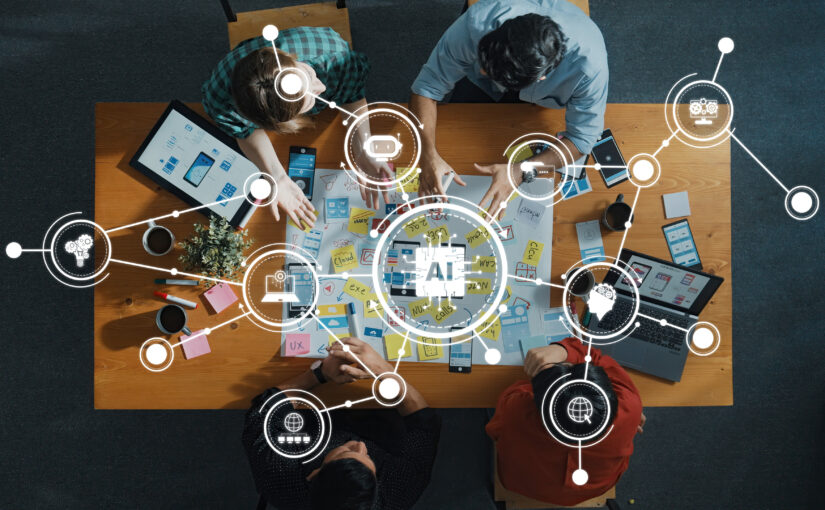
AI and the workplace are becoming increasingly connected as UK businesses use artificial intelligence to research information, create content, analyse data, automate routine tasks and improve productivity. As technology takes over more administrative work, an important question is emerging: if employees can accomplish more from laptops and digital platforms, do businesses still need offices?
The answer is not simply yes or no. Artificial intelligence is changing what people do at work, but it does not remove the need for collaboration, customer relationships, confidential conversations, training and human decision-making. Instead, AI may strengthen the argument for using workplaces more purposefully.
Businesses may need fewer traditional assumptions about offices, but they still need professional environments when people genuinely benefit from being together. The future could therefore involve less dependence on permanent space and greater access to meeting rooms, coworking areas, hot desks and flexible workplaces.
AI Adoption Is Accelerating Across UK Businesses
Artificial intelligence is no longer limited to technology companies. Businesses across professional services, finance, marketing, administration and other sectors now use AI tools as part of everyday work.
Recent research from the Office for National Statistics shows that AI adoption has increased significantly among UK businesses with 10 or more employees. Large language models have become one of the most widely used forms of AI technology.
Businesses can now complete tasks that once required considerable manual effort much faster. Employees can summarise documents, generate first drafts, analyse information, organise data or automate parts of customer administration.
However, increased digital capability does not automatically remove the value of people working together. In many cases, it changes which activities deserve valuable face-to-face time.
AI Can Automate Tasks, But Not Every Business Relationship
AI performs particularly well when businesses need to process information quickly. It can help employees prepare research, organise ideas and reduce repetitive administration.
Relationships work differently. A major customer deciding whether to sign a contract may want to meet the people behind the business. An investor may want to question a management team directly. Employees dealing with a sensitive issue may prefer a private conversation rather than another online exchange.
Important negotiations also depend on more than information. Tone, trust, body language and the ability to respond naturally can influence the outcome.
AI may help prepare the presentation, analyse the customer’s requirements and summarise the meeting afterwards. The relationship itself still belongs to people.
Professional Meeting Rooms Still Have a Clear Purpose
If routine work becomes more automated, businesses can become more selective about when employees need to meet. That makes the quality of those meetings more important.
A professional room provides privacy, fewer distractions and a clear setting for discussion. Through BluDesks, businesses can access meeting rooms for customer presentations, interviews, negotiations, training sessions and strategic discussions.
Instead of maintaining dedicated meeting facilities every day, companies can choose professional space when an important interaction requires it.
This approach fits naturally with AI-enabled working. Technology can make individual work faster, while professional meeting environments give people somewhere suitable to use the time saved for higher-value conversations.
Human Collaboration Still Drives Ideas and Decisions
AI can generate suggestions quickly, but businesses still need people to decide which ideas fit their customers, brand, finances and long-term strategy.
Teams often benefit from being together when they need to challenge assumptions, solve difficult problems or make decisions that involve several departments. The speed of an AI answer does not remove the need for judgement.
Our earlier article, “Why High-Performing Teams Perform Better Than Others”, explored how communication, trust and working environments influence performance. These factors remain important even as AI becomes more capable.
In fact, AI may make effective collaboration more valuable. When technology handles more routine work, people can spend a greater proportion of their time solving complex problems, building relationships and making decisions.
The Office May Change from a Daily Destination to a Resource
The traditional office model assumes that employees need the same workplace every working day. AI, cloud technology and hybrid working are challenging that assumption.
An employee may complete individual research from home, meet colleagues in a collaborative workspace the next day and visit a customer in another city later in the week. The business still needs workspace, but demand moves between locations and activities.
This is where the workplace can become a resource rather than a compulsory destination. Companies can use coworking spaces when teams need professional surroundings and hot desks when individuals need somewhere productive to work.
They can also access flexible workspaces and shared workspaces according to changing team requirements.
AI Strengthens the Case for Workspace on Demand
Our recent article, “Why More Businesses are Choosing Workspace on Demand”, examined why companies increasingly value access to workspace without maintaining permanent capacity for every possible requirement.
AI reinforces that trend. As businesses automate parts of their operations, they may become less dependent on traditional office routines. However, they still need physical space at specific moments.
A business might need ten desks for a project team this week and none next week. It may need a boardroom for an important negotiation without needing one throughout the year. A regional salesperson may need professional workspace near a customer rather than near headquarters.
Workspace on demand allows the physical workplace to become as flexible as the digital tools businesses now use.
AI Does Not Remove the Need for Training and Culture
Businesses also need to consider how employees learn to use new technology effectively. Introducing AI is not simply a matter of giving people access to software.
Teams need clear policies, shared standards and opportunities to discuss how technology should support their work. Employees may need training on data handling, customer confidentiality, accuracy and responsible use.
Government AI adoption research highlights barriers such as skills, understanding and confidence that can affect how businesses introduce artificial intelligence.
Workshops and team discussions give organisations a practical way to build common standards. Professional collaborative environments can therefore remain important even when the technology itself operates entirely online.
Smarter Technology Should Not Mean More Fixed Costs
Businesses invest in AI partly because they want greater productivity and efficiency. It makes little sense to gain flexibility digitally while remaining trapped by unnecessary physical overheads.
A company that needs fewer desks each day may not need to expand its permanent office. Instead, it can access additional capacity when employees need to collaborate or when customer demand increases.
This connects closely with “Business Expansion Starts with the Right Infrastructure”. Growing businesses need systems that can scale without turning every increase in activity into another long-term commitment.
Flexible workspace can help companies protect capital for technology, recruitment, marketing and customer development while maintaining access to professional facilities.
Digital Businesses Still Need a Professional Presence
AI can make a company more digital, but customers and official organisations still expect a reliable professional presence. Businesses need an address, secure correspondence management and consistent communication even when employees work across different locations.
BluDesks’ sister company, LowCost LetterBox, supports this side of modern operations. A Virtual Office London service can provide a professional business address without requiring a traditional full-time office.
A Registered Office Address can support eligible companies with their official address requirements and privacy. Meanwhile, Digital Mailroom Management Services can help teams receive and manage correspondence digitally while working from different locations.
The result is a business that can operate digitally without losing the stable professional foundation customers and partners expect.
AI Is Changing the Purpose of the Workplace
The rise of AI does not mean businesses will stop needing offices. It means they may become much more selective about why, when and where they use them.
Routine administration can increasingly happen through digital systems. Individual work can happen from different locations. The physical workplace can then focus more heavily on activities where human interaction creates real value: collaboration, customer relationships, training, confidential conversations and decision-making.
BluDesks gives businesses access to meeting rooms, coworking spaces, hot desks, flexible workspaces and shared workspaces according to demand. LowCost LetterBox complements this model with professional address and digital mail solutions.
AI and the workplace are evolving together. Artificial intelligence can help businesses work faster, but people still need places to meet, collaborate and build relationships. The future may therefore involve fewer fixed assumptions about offices and more freedom to access professional workspace exactly when human interaction matters most.