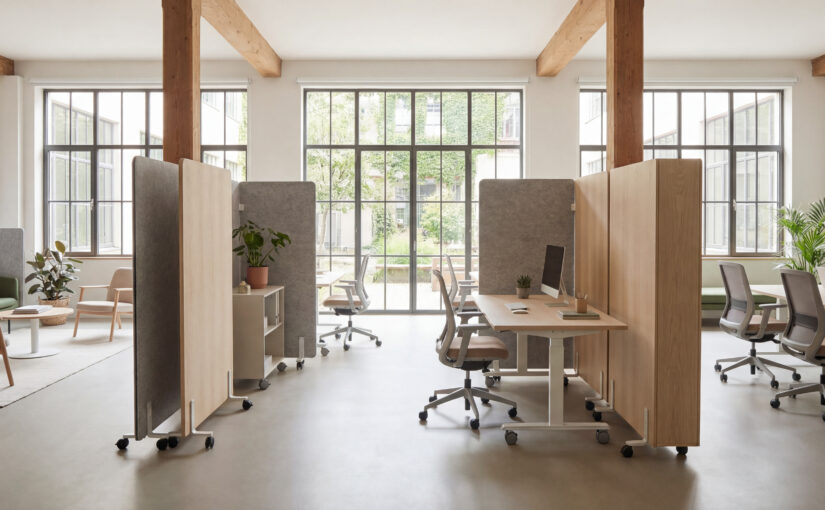
Workspace on demand is becoming an increasingly practical choice for UK businesses that want professional places to work without committing to more permanent office space than they need. Companies can now access meeting rooms, coworking spaces, hot desks and flexible workplaces according to actual demand rather than relying entirely on one fixed office.
This change reflects the way modern businesses operate. Employees may work from home, travel to meet clients, collaborate with colleagues in different cities or divide their week between several locations. At the same time, customers still expect professional meetings, reliable communication and responsive service.
A workspace-on-demand model gives organisations a practical middle ground. It combines the professionalism of an office with the flexibility to book space only when and where it creates value.
What Does Workspace on Demand Mean?
Workspace on demand allows individuals and businesses to access professional workspace for a specific period without taking a traditional long-term lease. A business might book a meeting room for an hour, use a hot desk for a day or arrange collaborative space for a short project.
The model is based on access rather than ownership. Companies do not need to maintain every desk, meeting room or regional office themselves. Instead, they can select the type of space that suits each activity.
This approach gives businesses more control over location, cost and capacity. It also helps them respond quickly when a customer meeting, team session or temporary workspace need appears unexpectedly.
Hybrid Working Has Changed Office Demand
Traditional offices were designed around predictable attendance. Employees travelled to the same location, used assigned desks and followed similar working hours. Hybrid working has changed that pattern.
Research from the Office for National Statistics shows that hybrid working remains part of working life in Great Britain. As employees divide their time between home and other workplaces, businesses may no longer need the same number of desks every day.
However, reduced daily attendance does not remove the need for professional workspace. Teams still need places for meetings, training, collaboration and focused work. The difference is that demand now changes from day to day.
Workspace on demand helps businesses meet that changing requirement without maintaining permanent capacity for occasional use.
Businesses Want Greater Control Over Fixed Costs
Office costs extend beyond rent. Businesses must also consider rates, utilities, furniture, cleaning, maintenance, insurance and technology. These costs continue even when desks and meeting rooms remain empty.
For startups and growing companies, large fixed commitments can reduce the money available for recruitment, marketing, technology and customer service. Even established businesses may question whether permanent space provides enough value when attendance varies.
Our previous article, “How to Beat London’s Sky-High Office Rents in 2026”, explored why businesses are reconsidering expensive traditional office commitments.
On-demand access helps companies convert part of their workplace budget into a cost linked more closely to actual use. They can book additional space during busy periods and reduce it when demand falls.
The Right Space Can Improve Every Meeting
Not every business conversation can happen effectively from home or in a café. Customer consultations, interviews, presentations and confidential discussions often require a private and properly equipped environment.
Through BluDesks, businesses can find meeting rooms according to location, size and purpose. This allows organisations to choose a convenient professional venue rather than asking every customer to travel to a central headquarters.
A suitable meeting room can improve privacy, reduce distractions and create a stronger first impression. It also gives employees the facilities they need to prepare, present information and focus fully on the conversation.
This is especially valuable for consultants, sales teams, recruiters and growing companies that need professional facilities but do not require a dedicated meeting room every day.
Employees Need More Than Home or Headquarters
The workplace discussion often focuses on two options: working from home or travelling to the main office. In reality, employees may need more choice.
A home environment may be unsuitable because of noise, limited space or unreliable internet. The main office may require a long journey that adds little value to an individual working day. A professional workspace closer to home can offer a better alternative.
Coworking spaces can provide a productive environment with professional facilities. Hot desks can support travelling employees, remote workers and professionals moving between customer appointments.
This wider choice can help employees focus while giving the business access to professional workspace without expanding its permanent office footprint.
Workspace on Demand Supports Business Expansion
A company entering a new city may not know how quickly demand will grow. Opening a permanent office too early can create unnecessary risk, while delaying expansion may cause the business to miss opportunities.
On-demand workspace allows businesses to establish a professional local presence gradually. Employees can meet customers, use desks while travelling and hold regional team sessions without leasing a dedicated site immediately.
Our article, “Business Expansion Starts with the Right Infrastructure”, explained how scalable workspace and administrative systems can help companies test new markets before making larger commitments.
This trial period gives leaders time to understand customer demand, travel patterns and staffing needs. They can then make long-term decisions using real experience rather than assumptions.
Flexible Access Can Strengthen Business Continuity
Businesses that rely entirely on one office may struggle when transport disruption, extreme weather or local building problems affect access. Even a short interruption can delay meetings and reduce productivity.
Workspace on demand provides alternatives. A team can move an important meeting to another location. Employees can use professional workspace closer to home. A travelling manager can continue working without returning to headquarters.
The BluDesks article “Train Delays, Tube Disruption and Business Productivity: A Smarter Way to Work” explored how travel problems can affect employees, customers and daily operations.
Flexible workspace cannot remove disruption, but it can reduce the business impact by giving teams more than one place to work.
On-Demand Space Makes Collaboration More Purposeful
Flexible working does not mean that teams should avoid meeting in person. Face-to-face time remains valuable for planning, training, problem-solving and building relationships.
The difference is that businesses can arrange meetings with a clear purpose instead of requiring attendance simply because an office exists. A company can book a collaborative space when the team needs to develop ideas, review progress or make important decisions.
Our article, “Why High-Performing Teams Perform Better Than Others”, showed that strong performance depends on communication, trust and an environment that supports the task.
Using the right space for a specific team activity can make meetings more focused and help employees understand why their presence matters.
Workplace Choice Can Support Recruitment
Employees increasingly consider location, commuting time and working arrangements when choosing where to work. A company that recruits only within travelling distance of one office may limit its access to talent.
Current UK government guidance on flexible working explains that employees can request changes to their working hours, patterns or location.
Businesses still need to protect customer service and operational requirements. However, access to different professional workplaces can make flexibility easier to manage. Employees gain more options, while employers maintain expectations around productivity, privacy and professional standards.
This can help organisations recruit from a wider area and offer practical workplace choices without becoming fully remote.
A Flexible Team Still Needs a Stable Business Base
Workspace can change according to demand, but the company still needs a consistent professional identity. Customers, suppliers and official bodies need a reliable address. Important correspondence must also reach the right person when employees work from different locations.
BluDesks’ sister company, LowCost LetterBox, supports this part of a flexible operating model. A Virtual Office London service can help a business maintain a professional address without depending on a permanent full-time office.
A Registered Office Address can support eligible companies with privacy and compliance. Meanwhile, Digital Mailroom Management Services can help teams receive and manage business correspondence across different locations.
Together, professional workspace access and reliable mail infrastructure allow the team to remain flexible while the company maintains a stable business presence.
Access Is Becoming More Valuable Than Ownership
Businesses still need offices, meeting rooms and professional places to work. However, they do not always need to lease or manage every space themselves.
An access-based model allows a company to select the right environment, in the right location, for the right amount of time. This can reduce unused capacity while improving the experience of employees and customers.
BluDesks gives businesses access to meeting rooms, coworking spaces, hot desks, flexible workspaces and shared workspaces according to demand. LowCost LetterBox complements this model through professional address and mail management services.
More businesses are choosing workspace on demand because it gives them control without reducing professionalism. It allows organisations to manage costs, support employees, serve customers and expand with greater confidence. Instead of making the business fit one fixed office, workspace can now adapt to the business.