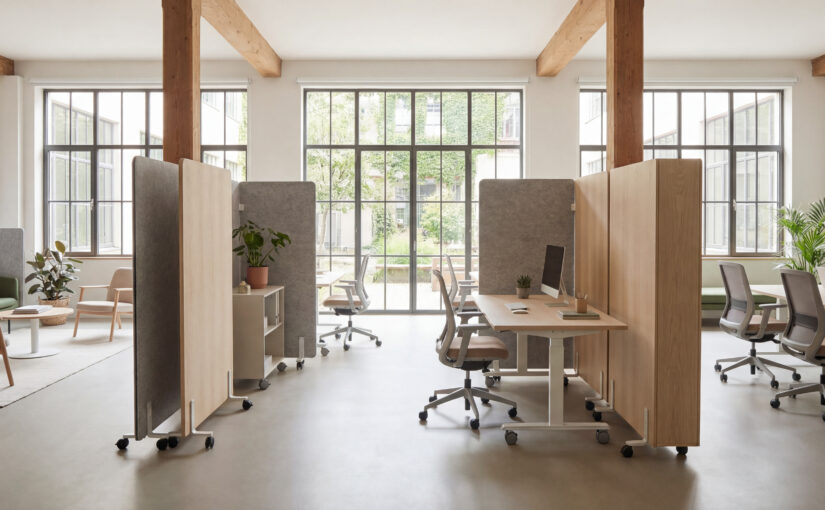
Does Your Business Really Need More Office Space—or Just Better Access to It?

Date: Sun Aug 16 Author: Stanley Samidas

Office space is often one of the first things businesses reconsider when teams grow, meeting rooms become busy or employees complain about a lack of desks. The obvious answer may seem to be a larger office. However, before signing a bigger lease, businesses should ask a different question: do they genuinely need more permanent space, or simply better access to the right workspace when demand arises?

The distinction matters. Modern businesses rarely use every part of an office equally throughout the week. Some days bring large team meetings and customer appointments. On others, employees work remotely, visit clients or travel between locations. Paying permanently for peak capacity can therefore create unnecessary overheads.

A more flexible approach allows businesses to access professional meeting rooms, coworking spaces, hot desks and collaborative environments when they need them. Instead of making the office bigger, companies can make their workplace options broader.

Why More Space Is Not Always the Answer

When a company feels crowded, moving into larger premises can appear logical. Yet the problem may not be the total amount of space. It may be when and how teams use it.

A business may experience heavy demand for desks on Tuesdays and Wednesdays but much lower attendance on Mondays and Fridays. Meeting rooms may become difficult to book during certain periods while remaining unused at other times. A growing sales team may also spend much of its week visiting customers rather than sitting at headquarters.

Taking a larger office solves the busiest-day problem by creating capacity every day. Unfortunately, the business then pays for that extra capacity whether employees use it or not.

Before expanding permanently, businesses should understand their actual workspace patterns. The smarter solution may involve keeping the existing base while adding flexible access around periods of higher demand.

Hybrid Working Has Changed How Businesses Use Offices

Hybrid working has changed the relationship between headcount and office size. A company with 50 employees does not necessarily need 50 permanent desks if employees divide their working week between different locations.

Research into UK workplace patterns continues to show that hybrid working has become an established part of working life. The House of Commons Library has highlighted the continuing role of hybrid arrangements across Great Britain.

This does not mean businesses no longer need offices. In many organisations, teams increasingly use offices for specific reasons rather than simply because every working day must happen there.

Meetings, collaboration, training, interviews and customer discussions all benefit from suitable professional environments. Individual work may happen elsewhere. That changes the calculation from “How many employees do we have?” to “What type of space do our people need, and when?”

Think About Peak Demand, Not Permanent Capacity

Many businesses size their offices around the busiest possible day. That approach provides certainty, but it can also create significant unused capacity.

Imagine a company that needs an additional meeting room three times each month. Expanding its permanent office simply to accommodate those occasions may make little financial sense. The same applies to a team that occasionally needs ten additional desks for a project.

Through BluDesks, businesses can add workspace when demand appears rather than building every possible requirement into their permanent premises.

This approach can give companies the capacity of a larger workplace without requiring them to carry the full-time cost of one.

Meeting Rooms Are a Good Example

Meeting rooms take up valuable office space, yet businesses often use them unevenly. They may be essential during customer visits, recruitment periods, training days or board meetings, but quiet during the rest of the week.

Rather than increasing permanent office space to add more meeting rooms, companies can use professional meeting rooms when required.

This also gives businesses greater location choice. A customer who works across London may prefer a meeting venue closer to their office. A regional team may find it easier to meet somewhere between their usual locations rather than travelling to headquarters.

The company gains access to the facilities it needs while avoiding the cost of maintaining those facilities every day.

Give Employees Access to Space Closer to Where They Are

A larger headquarters does not solve every workplace challenge. Employees who live far away may still face long commutes. Travelling salespeople may still need somewhere to work between customer appointments. Remote employees may occasionally need an alternative to working from home.

Coworking spaces and hot desks can provide professional environments closer to where employees already are.

Businesses can also use flexible workspaces and shared workspaces when project teams or temporary requirements create additional demand.

This gives businesses something a larger fixed office cannot always provide: location flexibility.

Access Can Be More Valuable Than Ownership

Our recent article, “Why More Businesses are Choosing Workspace on Demand”, explored the wider shift towards accessing professional workspace only when it creates value.

This principle becomes especially important when companies consider expansion. Businesses do not necessarily need to own, lease or manage every facility they use.

They need reliable access to those facilities.

Technology has already made this concept normal in other areas of business. Companies use cloud software rather than maintaining every system themselves. They use outsourced specialists when they need particular expertise. Workspace can follow the same model.

Access allows businesses to increase capacity without permanently increasing their property footprint.

Better Workspace Planning Can Protect Cash Flow

A larger office brings more than additional rent. Businesses may also face higher utilities, rates, insurance, furniture, cleaning, maintenance and technology costs.

Our earlier article, “How to Beat London’s Sky-High Office Rents in 2026”, examined why companies should think carefully about permanent property commitments.

Money tied up in unnecessary space cannot support recruitment, technology, marketing or customer acquisition. Flexible access gives businesses an opportunity to direct more resources towards activities that generate growth.

The objective is not simply to find the cheapest workspace. It is to make workplace expenditure match actual business requirements more closely.

Growing Businesses Need Space That Can Scale

Growth can be unpredictable. A business may recruit quickly after winning a major contract and then stabilise its headcount. It may open a new regional market without knowing how large the local team will eventually become.

A flexible approach reduces the pressure to predict every requirement years in advance.

As discussed in “Business Expansion Starts with the Right Infrastructure”, scalable infrastructure allows companies to follow demand rather than building permanent capacity before they know whether they need it.

A company can use additional workspaces during growth periods, test new locations and then make larger property decisions when the evidence supports them.

The Quality of Space Matters Too

More square footage does not automatically create a better workplace. Employees and customers care about privacy, comfort, technology, accessibility and the overall quality of the environment.

UK office market research increasingly points towards demand for higher-quality spaces that support collaboration and employee experience. JLL’s analysis of the UK office market describes hybrid working as a structural feature and highlights a stronger focus on high-quality office environments.

That reinforces an important point. Businesses should not only ask how much space they have. They should ask whether the space available actually supports the work people need to do.

Flexible Workspace Still Needs a Stable Business Base

A business can use different workspaces without constantly changing its professional identity. Customers, suppliers and official organisations still need a reliable address and a consistent way to communicate with the company.

BluDesks’ sister company, LowCost LetterBox, supports this side of flexible operations. A Virtual Office London service can provide a professional business address without requiring a permanent full-time office.

A Registered Office Address can support eligible businesses with official address requirements and privacy. Meanwhile, Digital Mailroom Management Services can help teams manage correspondence while employees work from different locations.

Together, flexible workspace and professional business infrastructure allow companies to separate where people work from where the organisation maintains its stable business presence.

Before You Take More Space, Ask Better Questions

Businesses should analyse how employees and customers actually use workspace before committing to larger premises. Which days create the greatest pressure? Do you need more desks, more meeting rooms or simply another location? How much additional space would remain unused during quieter periods?

The answer may still be a larger permanent office. Some companies genuinely need one. However, others may discover that their real requirement is access to additional professional space at specific times and in specific locations.

BluDesks gives businesses access to meeting rooms, coworking spaces, hot desks, flexible workspaces and shared workspaces according to demand. LowCost LetterBox complements this model with professional address and mail management solutions.

Before increasing your permanent office space, consider whether better access could solve the problem more efficiently. The smartest workplace may not be the biggest one. It may be the one that gives your business exactly the space it needs, exactly when it needs it.

Why More Businesses are Choosing Workspace on Demand

Date: Wed Aug 5 Author: Stanley Samidas

Workspace on demand is becoming an increasingly practical choice for UK businesses that want professional places to work without committing to more permanent office space than they need. Companies can now access meeting rooms, coworking spaces, hot desks and flexible workplaces according to actual demand rather than relying entirely on one fixed office.

This change reflects the way modern businesses operate. Employees may work from home, travel to meet clients, collaborate with colleagues in different cities or divide their week between several locations. At the same time, customers still expect professional meetings, reliable communication and responsive service.

A workspace-on-demand model gives organisations a practical middle ground. It combines the professionalism of an office with the flexibility to book space only when and where it creates value.

What Does Workspace on Demand Mean?

Workspace on demand allows individuals and businesses to access professional workspace for a specific period without taking a traditional long-term lease. A business might book a meeting room for an hour, use a hot desk for a day or arrange collaborative space for a short project.

The model is based on access rather than ownership. Companies do not need to maintain every desk, meeting room or regional office themselves. Instead, they can select the type of space that suits each activity.

This approach gives businesses more control over location, cost and capacity. It also helps them respond quickly when a customer meeting, team session or temporary workspace need appears unexpectedly.

Hybrid Working Has Changed Office Demand

Traditional offices were designed around predictable attendance. Employees travelled to the same location, used assigned desks and followed similar working hours. Hybrid working has changed that pattern.

Research from the Office for National Statistics shows that hybrid working remains part of working life in Great Britain. As employees divide their time between home and other workplaces, businesses may no longer need the same number of desks every day.

However, reduced daily attendance does not remove the need for professional workspace. Teams still need places for meetings, training, collaboration and focused work. The difference is that demand now changes from day to day.

Workspace on demand helps businesses meet that changing requirement without maintaining permanent capacity for occasional use.

Businesses Want Greater Control Over Fixed Costs

Office costs extend beyond rent. Businesses must also consider rates, utilities, furniture, cleaning, maintenance, insurance and technology. These costs continue even when desks and meeting rooms remain empty.

For startups and growing companies, large fixed commitments can reduce the money available for recruitment, marketing, technology and customer service. Even established businesses may question whether permanent space provides enough value when attendance varies.

Our previous article, “How to Beat London’s Sky-High Office Rents in 2026”, explored why businesses are reconsidering expensive traditional office commitments.

On-demand access helps companies convert part of their workplace budget into a cost linked more closely to actual use. They can book additional space during busy periods and reduce it when demand falls.

The Right Space Can Improve Every Meeting

Not every business conversation can happen effectively from home or in a café. Customer consultations, interviews, presentations and confidential discussions often require a private and properly equipped environment.

Through BluDesks, businesses can find meeting rooms according to location, size and purpose. This allows organisations to choose a convenient professional venue rather than asking every customer to travel to a central headquarters.

A suitable meeting room can improve privacy, reduce distractions and create a stronger first impression. It also gives employees the facilities they need to prepare, present information and focus fully on the conversation.

This is especially valuable for consultants, sales teams, recruiters and growing companies that need professional facilities but do not require a dedicated meeting room every day.

Employees Need More Than Home or Headquarters

The workplace discussion often focuses on two options: working from home or travelling to the main office. In reality, employees may need more choice.

A home environment may be unsuitable because of noise, limited space or unreliable internet. The main office may require a long journey that adds little value to an individual working day. A professional workspace closer to home can offer a better alternative.

Coworking spaces can provide a productive environment with professional facilities. Hot desks can support travelling employees, remote workers and professionals moving between customer appointments.

This wider choice can help employees focus while giving the business access to professional workspace without expanding its permanent office footprint.

Workspace on Demand Supports Business Expansion

A company entering a new city may not know how quickly demand will grow. Opening a permanent office too early can create unnecessary risk, while delaying expansion may cause the business to miss opportunities.

On-demand workspace allows businesses to establish a professional local presence gradually. Employees can meet customers, use desks while travelling and hold regional team sessions without leasing a dedicated site immediately.

Our article, “Business Expansion Starts with the Right Infrastructure”, explained how scalable workspace and administrative systems can help companies test new markets before making larger commitments.

This trial period gives leaders time to understand customer demand, travel patterns and staffing needs. They can then make long-term decisions using real experience rather than assumptions.

Flexible Access Can Strengthen Business Continuity

Businesses that rely entirely on one office may struggle when transport disruption, extreme weather or local building problems affect access. Even a short interruption can delay meetings and reduce productivity.

Workspace on demand provides alternatives. A team can move an important meeting to another location. Employees can use professional workspace closer to home. A travelling manager can continue working without returning to headquarters.

The BluDesks article “Train Delays, Tube Disruption and Business Productivity: A Smarter Way to Work” explored how travel problems can affect employees, customers and daily operations.

Flexible workspace cannot remove disruption, but it can reduce the business impact by giving teams more than one place to work.

On-Demand Space Makes Collaboration More Purposeful

Flexible working does not mean that teams should avoid meeting in person. Face-to-face time remains valuable for planning, training, problem-solving and building relationships.

The difference is that businesses can arrange meetings with a clear purpose instead of requiring attendance simply because an office exists. A company can book a collaborative space when the team needs to develop ideas, review progress or make important decisions.

Our article, “Why High-Performing Teams Perform Better Than Others”, showed that strong performance depends on communication, trust and an environment that supports the task.

Using the right space for a specific team activity can make meetings more focused and help employees understand why their presence matters.

Workplace Choice Can Support Recruitment

Employees increasingly consider location, commuting time and working arrangements when choosing where to work. A company that recruits only within travelling distance of one office may limit its access to talent.

Current UK government guidance on flexible working explains that employees can request changes to their working hours, patterns or location.

Businesses still need to protect customer service and operational requirements. However, access to different professional workplaces can make flexibility easier to manage. Employees gain more options, while employers maintain expectations around productivity, privacy and professional standards.

This can help organisations recruit from a wider area and offer practical workplace choices without becoming fully remote.

A Flexible Team Still Needs a Stable Business Base

Workspace can change according to demand, but the company still needs a consistent professional identity. Customers, suppliers and official bodies need a reliable address. Important correspondence must also reach the right person when employees work from different locations.

BluDesks’ sister company, LowCost LetterBox, supports this part of a flexible operating model. A Virtual Office London service can help a business maintain a professional address without depending on a permanent full-time office.

A Registered Office Address can support eligible companies with privacy and compliance. Meanwhile, Digital Mailroom Management Services can help teams receive and manage business correspondence across different locations.

Together, professional workspace access and reliable mail infrastructure allow the team to remain flexible while the company maintains a stable business presence.

Access Is Becoming More Valuable Than Ownership

Businesses still need offices, meeting rooms and professional places to work. However, they do not always need to lease or manage every space themselves.

An access-based model allows a company to select the right environment, in the right location, for the right amount of time. This can reduce unused capacity while improving the experience of employees and customers.

BluDesks gives businesses access to meeting rooms, coworking spaces, hot desks, flexible workspaces and shared workspaces according to demand. LowCost LetterBox complements this model through professional address and mail management services.

More businesses are choosing workspace on demand because it gives them control without reducing professionalism. It allows organisations to manage costs, support employees, serve customers and expand with greater confidence. Instead of making the business fit one fixed office, workspace can now adapt to the business.

Business Expansion Starts with the Right Infrastructure

Date: Thu Jul 23 Author: Stanley Samidas

Business expansion can create exciting opportunities, but growth also puts pressure on people, workspace, systems and costs. A company may win new customers, recruit more employees, enter another city or launch a new service. However, growth becomes difficult when the business still relies on arrangements designed for a much smaller operation.

Many organisations respond by taking on larger permanent commitments. They lease a bigger office, purchase more furniture and increase their facilities before they fully understand their future requirements. This can create unnecessary overheads and reduce the freedom to adapt.

A stronger approach is to build infrastructure that can grow with the business. Flexible workspaces, professional meeting rooms, reliable business addresses and digital mail management can support expansion without forcing every decision to become permanent.

What Does Business Infrastructure Include?

Business infrastructure includes the practical resources and systems that allow a company to operate effectively. It is not limited to technology or office space. It also covers workplace access, communication, administration, customer contact, document management and the processes that connect them.

A small business may operate successfully from one location with a compact team. As demand increases, the same setup can become restrictive. Employees may struggle to find suitable meeting space. Customers may expect a more professional environment. Important correspondence may also become harder to manage when people work from different locations.

The right infrastructure removes these barriers. It gives the business enough structure to remain professional while providing the flexibility required to respond to change.

Growth Does Not Always Require a Bigger Office

A larger office can appear to be the natural next step for a growing company. Yet business growth does not always require more permanent space.

Teams rarely use every desk and meeting room every day. Employees may work remotely, travel to customer locations, attend events or follow hybrid schedules. A company that expands its office too quickly may pay for capacity that remains unused.

Long leases can also limit future choices. Customer demand may change, recruitment may slow or the business may decide to expand in another location. A large fixed office can then become a financial burden instead of a growth asset.

Flexible workspace provides a practical alternative. Through BluDesks, businesses can access professional workspace when required. This allows them to increase capacity without immediately increasing fixed property commitments.

Choose the Right Workspace for Each Task

Different business activities require different environments. A confidential customer discussion needs privacy. A team workshop needs room for collaboration. A remote employee may only need a quiet desk, reliable internet and a professional setting.

Meeting rooms can support presentations, interviews, training, planning sessions and important customer conversations. Coworking spaces provide a productive base for individuals and teams.

Hot desks give travelling professionals and hybrid employees somewhere suitable to work for a day. Meanwhile, flexible workspaces and shared workspaces can accommodate changing team sizes without requiring a traditional lease.

This task-based approach gives businesses more control. Instead of paying for one permanent space to handle every situation, they can select the most suitable environment for each activity.

Professional Meetings Support Confident Expansion

Expansion often creates a greater need for meetings. Businesses may need to speak with investors, interview candidates, negotiate with suppliers, train employees or present proposals to potential customers.

The environment can influence how those conversations feel. A noisy café or unsuitable home setting may distract participants and weaken the professional impression. A properly equipped meeting room gives the business privacy, structure and the facilities needed for a productive discussion.

Professional space can also help teams prepare more effectively. Employees can arrive early, review documents, test presentation equipment and welcome guests in an organised environment.

As we explored in “Why High-Performing Teams Perform Better Than Others”, strong performance depends on more than individual ability. Clear communication, trust, collaboration and an effective working environment all matter.

Support People as the Business Grows

Successful expansion depends on people. New employees need suitable places to work, clear processes and reliable access to colleagues and resources. Existing employees also need support as their responsibilities change.

A rigid office model can make recruitment more difficult when talented candidates live far from the main location. It may also create long journeys that reduce employee energy and productivity.

Access to coworking spaces and hot desks can give employees more choice while maintaining a professional working environment. Regional teams can meet without travelling to headquarters, while remote employees can use workspace closer to home.

This does not mean that every employee must work separately. Face-to-face collaboration remains valuable. Flexible infrastructure simply allows businesses to decide when physical attendance creates the greatest benefit.

Protect Cash Flow During Expansion

Growth requires investment. Businesses may need to spend money on recruitment, marketing, technology, stock, product development or customer support. Capital committed to unnecessary office capacity cannot support these other priorities.

A flexible workplace model can turn part of the property budget from a fixed commitment into a cost linked more closely to actual use. Businesses can book meeting rooms for important appointments, use coworking space during busy periods and add workspace as teams grow.

Our previous article, “How to Beat London’s Sky-High Office Rents in 2026”, examined why companies are reconsidering expensive traditional office commitments. Flexible access can help businesses remain professional while protecting capital for the activities that directly support growth.

Government guidance on growing a business encourages companies to test new products and services before making unnecessary investments. Businesses can apply a similar principle to workplace expansion by testing a new location before committing to long-term premises.

Enter New Locations with Less Risk

Entering a new town, city or country can create valuable opportunities. However, opening a permanent office before demand is proven can expose a company to avoidable risk.

Flexible workspace allows businesses to establish a presence gradually. A sales team can meet local customers in a professional room. Employees can use coworking space while the company evaluates recruitment needs. Managers can also hold regional meetings without immediately leasing a dedicated site.

This creates a useful testing period. Leaders can study customer demand, travel patterns, team requirements and local operating costs before making a larger commitment.

BluDesks provides access to meeting rooms and professional workspace across a wide range of locations. This allows a growing company to follow opportunity rather than restricting expansion to places where it already owns or leases space.

Build Resilience into the Expansion Plan

Growth can make a business stronger, but it can also create new points of dependence. A larger team may rely heavily on one office, one transport route or one administrative system.

Flexible infrastructure gives businesses alternatives. When travel disruption affects the usual workplace, employees may be able to work from another location. When a meeting cannot take place at headquarters, the company can move it to a professional space elsewhere.

Our articles “Business Continuity: Keep Your Business Running During UK Heatwaves” and “Train Delays, Tube Disruption and Business Productivity” explain how weather and transport problems can interrupt normal working patterns.

Resilience does not require a separate permanent office in every area. It requires practical alternatives that a business can activate when circumstances change.

Maintain a Stable Business Presence

A flexible workplace strategy still needs a stable business identity. Customers, suppliers, government bodies and professional partners must know how to contact the company. Important correspondence must also reach the right person when the team works across several locations.

BluDesks’ sister company, LowCost LetterBox, can help provide this administrative foundation. A Virtual Office London service can give a business a professional point of contact without requiring a full-time office.

A Registered Office Address can help eligible companies maintain an official address while protecting personal privacy. Meanwhile, Digital Mailroom Management Services can help teams manage correspondence when employees work remotely or from several locations.

These services allow the business to maintain a consistent professional base while keeping its operational footprint flexible.

Create Infrastructure That Follows the Business

Business infrastructure works best when its different parts support one another. Workspace access alone will not solve administrative problems. A professional address alone will not provide a suitable environment for a customer presentation.

By combining flexible workspace with reliable address and mail services, a growing company can build a more complete operating model. Employees can work and meet in suitable locations while important correspondence continues to flow through a consistent system.

This approach can be especially valuable for consultants, startups, project teams, regional sales operations and companies entering new markets. They can present a professional image without creating a large permanent property burden.

BluDesks gives businesses access to meeting rooms, coworking spaces, hot desks, flexible workspaces and shared workspaces according to demand. Its sister company, LowCost LetterBox, complements this model with Virtual Office London, Registered Office Address and Digital Mailroom Management Services, providing businesses with a complete infrastructure for sustainable growth.

Business expansion starts with the right infrastructure because growth needs more than ambition. It needs practical systems that can scale without becoming obstacles. When workspace and administration remain flexible, a business can invest more confidently, respond more quickly and build a stronger foundation for its next stage.